
Have a question about a compound, reconstitution protocol, or COA? Our analytical team responds within one business day.
Traditional peptide manufacturing relies on solvents like DMF that are both environmentally harmful and subject to tightening global restrictions. For Canadian researchers sourcing compounds for in-vitro use, the shift toward green peptide synthesis has direct implications: how peptides are made affects purity, batch consistency, and the long-term reliability of your supply chain. This article breaks down what sustainable synthesis methods look like, what the research community is moving toward, and how domestic sourcing fits into that picture.
Most research peptides are built using solid-phase peptide synthesis, or SPPS. The method works by attaching amino acids one by one to a solid support material until the full peptide chain is assembled. It produces high-purity compounds reliably, but it consumes a significant amount of solvent, reagents, and energy to do it.
Three factors drive the environmental cost of conventional SPPS:
Researchers track the cumulative weight of all inputs versus the weight of the final product using a metric called process mass intensity (PMI).
Green peptide synthesis applies the 12 principles of green chemistry to peptide manufacturing. The aim is not to compromise on compound quality but to achieve equivalent or superior results with a smaller environmental footprint.
Four levers drive this shift:
Replacing DMF is the most immediate opportunity. Researchers have identified several viable alternatives:
Reducing the excess of coupling agents and protecting groups, the chemical scaffolding used during synthesis cuts waste at the source. Continuous-flow synthesis platforms achieve this by delivering reagents in tightly controlled streams rather than bulk batch additions, which means less overshoot and lower overall chemical consumption.
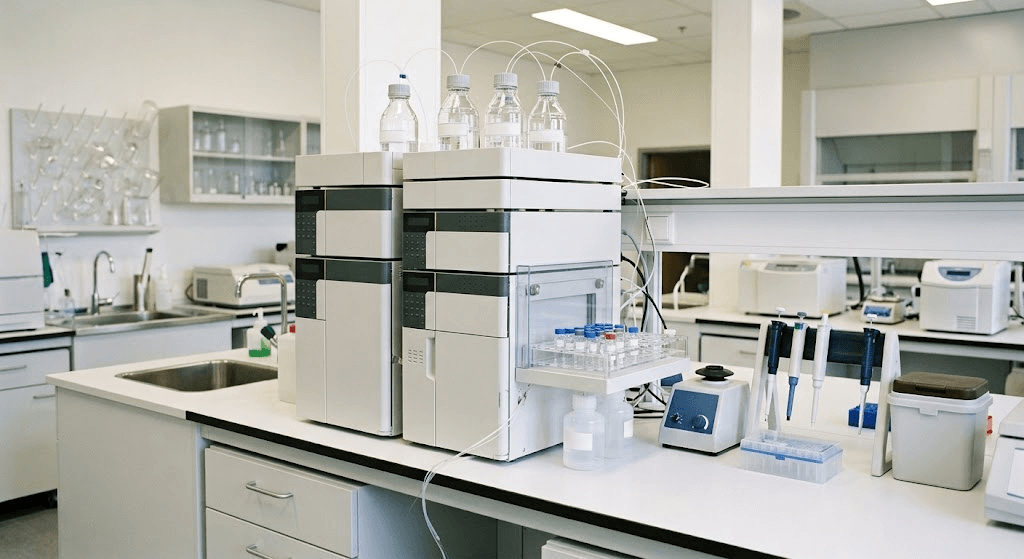
Every round of HPLC purification adds to the solvent burden. Manufacturers reduce this load by:
The most forward-looking approach does not retrofit green principles onto conventional synthesis; it builds sustainability in from the start. Continuous-flow platforms and enzymatic synthesis routes (covered in the next section) represent this approach: the process architecture itself generates less waste, not just the choice of solvent.
The adoption of green peptide synthesis methods produces cleaner crude peptides than conventional DMF-based approaches.
The logic runs in one direction: if a synthesis process generates fewer impurities during the reaction, less purification is needed to reach the target purity threshold. Less purification means fewer HPLC solvent cycles, which reduces the overall environmental load of the finished compound. Better process chemistry and a smaller footprint are not competing outcomes; they reinforce each other.
Impurity profiles directly affect experimental reproducibility. A compound with a well-documented synthesis process and independently verified purity will behave consistently across experiments. One sourced from a supplier with opaque manufacturing practices introduces a variable you cannot control.
Practical implications for in-vitro researchers:
The Canadian research peptide market has historically depended on international suppliers, most of them operating in jurisdictions with different regulatory and environmental frameworks. As global interest in green peptide synthesis grows, that dependency also means Canadian researchers have had limited visibility into whether the compounds they source meet any meaningful sustainability or manufacturing standard.
Switching to a domestic Canadian supplier addresses several problems simultaneously:
For in-vitro research programs where compound identity and purity are critical variables, that transparency is not a marketing claim. It is a reproducibility requirement.
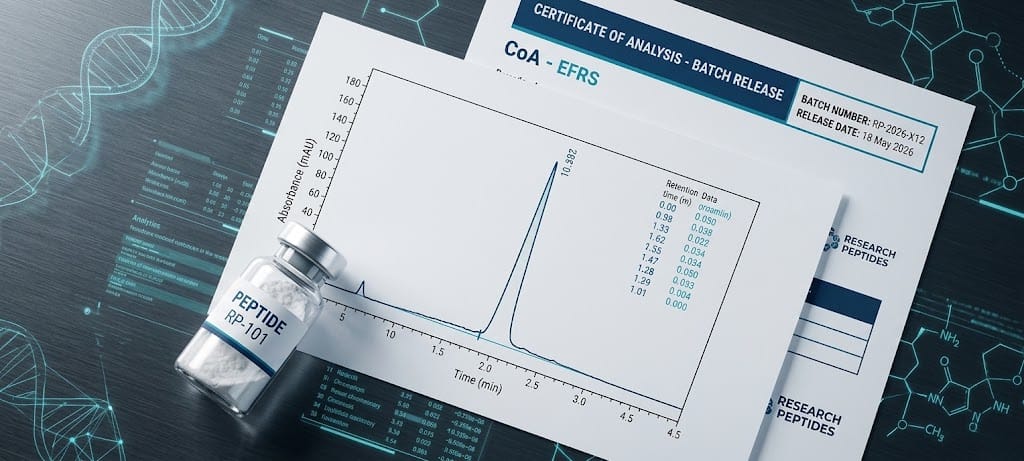
Every batch undergoes independent third-party HPLC and MS (mass spectrometry) testing before it reaches Canadian researchers. That means:
The result is a 99%+ purity standard with batch-specific COAs available for download on every product page. That exceeds the 95-98% industry average that many vendors treat as a ceiling.
For compounds like IGF-1 LR3 and Ipamorelin, where molecular complexity makes purity harder to achieve and easier to obscure, independent verification is the only reliable standard, not supplier claims, not reused certificates.
Sustainable synthesis and verified purity are not competing priorities. The best-manufactured compounds are increasingly the cleanest ones, and the best-documented supply chains are the domestic ones. If you’re sourcing research peptides in Canada, the standard to hold your supplier to is straightforward: show me the COA, show me the batch number, and show me where it shipped from.
Biovantage Labs meets that standard on every order.
Green chemistry in peptide synthesis applies environmental design principles to how peptide chains are assembled and purified. The core goals are reducing toxic solvent use, lowering reagent excess, minimising waste generation, and achieving equivalent or better purity outcomes with a smaller environmental footprint. In practice, manufacturers replace DMF with bio-based solvents, adopt continuous-flow reactors, and integrate enzymatic coupling steps for sequences where biocatalytic routes are viable.
Sustainable research peptide manufacturing combines several approaches: manufacturers substitute DMF with greener solvents such as triethyl phosphate or binary solvent blends, run synthesis in continuous-flow platforms that reduce reagent volumes, and optimise purification cycles to cut overall HPLC solvent consumption. Some manufacturers also integrate enzymatic synthesis for sequences where biocatalytic routes are viable.
Conventional SPPS carries a significant environmental load, primarily from solvent use and reagent excess. DMF, the historically dominant solvent, is classified as a reproductive toxin and now restricted in the EU under REACH. The scale of solvent consumption in standard batch SPPS, combined with multi-cycle HPLC purification, drives high process mass intensity scores. Eco-friendly synthesis routes actively address these issues, and published research demonstrates that greener alternatives match or improve on conventional purity outcomes.
Several solvents now serve as DMF alternatives in sustainable SPPS. Triethyl phosphate (TEP) shows good compatibility with standard solid-phase chemistries. Binary mixtures using butyl acetate and DMSO have demonstrated improved crude purity for complex sequences in published research. 2-Methyltetrahydrofuran (2-MeTHF), derived from renewable feedstocks, features in some formulations. The optimal choice depends on the target peptide sequence, resin type, and synthesis platform.
Studies comparing green solvent systems to DMF-based synthesis consistently find that greener approaches produce equal or superior crude purity in controlled comparisons. Cleaner synthesis reduces the number of HPLC purification passes required and, in turn, the total solvent burden of the finished compound. For end users, independently verified purity, confirmed by HPLC and MS testing, remains the most reliable quality indicator regardless of the synthesis method used.
| RESEARCH USE ONLY DISCLAIMERAll compounds referenced in this article are supplied by Performance Peptides Canada (Biovantage Labs) strictly for in-vitro laboratory and independent scientific research use. These products are not intended for human consumption, therapeutic use, or clinical application. They have not been evaluated or approved by Health Canada for use as drugs or health products. This content does not constitute medical advice, dosage guidance, or an endorsement of any specific research protocol. Researchers are responsible for compliance with all applicable federal, provincial, and institutional regulations governing the use of research chemicals in their jurisdiction.Health Canada has issued public advisories regarding BPC-157, TB-500, CJC-1295, and Ipamorelin. All content on this site reflects strict research-use-only positioning in accordance with Health Canada guidelines. |
Experience unparalleled research integrity with 99%+ purity guaranteed via third-party HPLC testing, supported by 100% domestic Canadian fulfillment and expert technical guidance for every reconstitution and storage inquiry.