

Have a question about a compound, reconstitution protocol, or COA? Our analytical team responds within one business day.



Peptide-drug conjugate research is an active area of preclinical oncology investigation. This article covers how PDCs work as targeted delivery systems, how they differ from antibody-drug conjugates (ADCs), what the published research shows, and how Canadian researchers can source verified compounds for PDC studies.
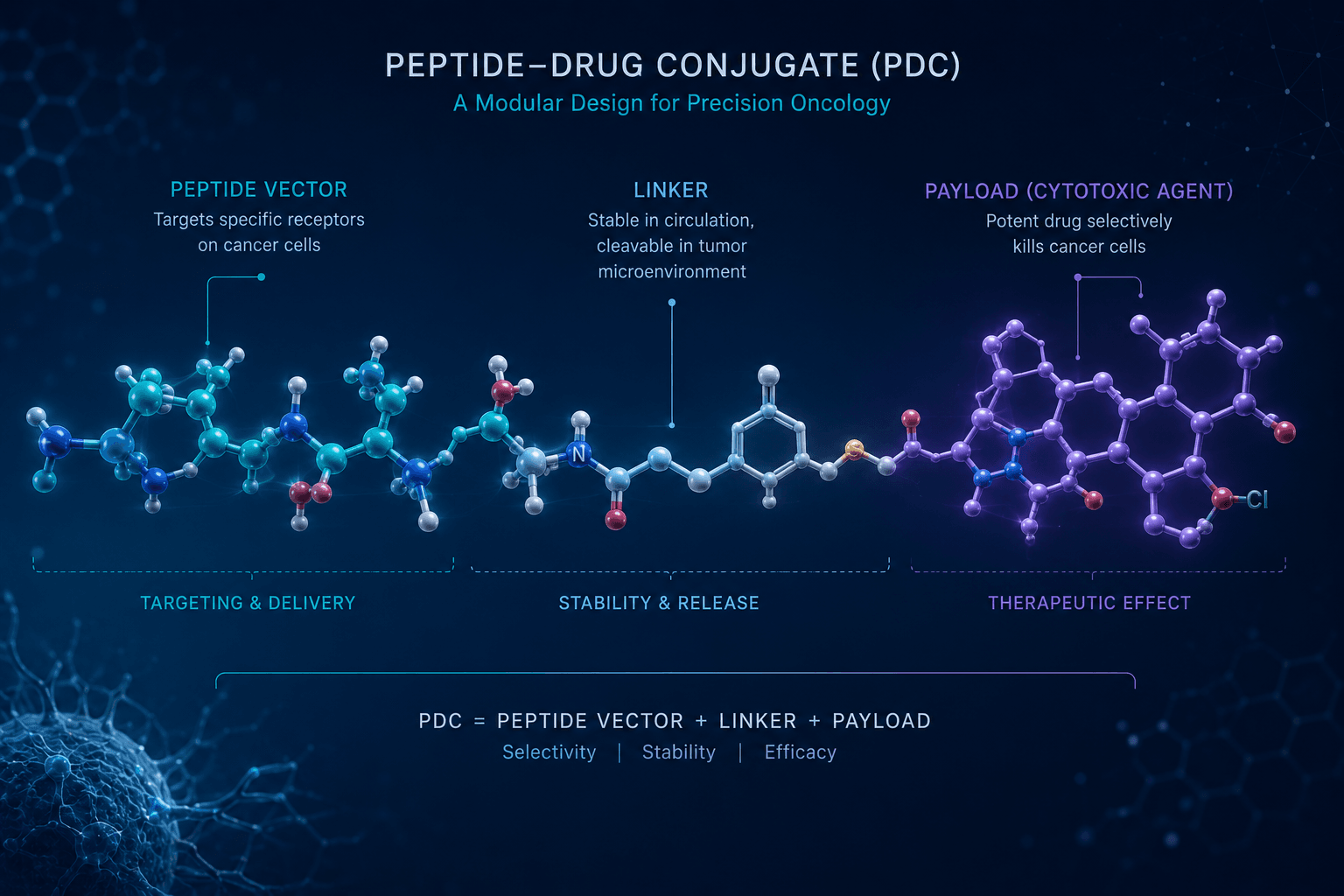
A peptide-drug conjugate links a cytotoxic payload to a short peptide sequence via a chemical linker. The peptide acts as a homing agent, directing the drug toward cells that overexpress a specific surface receptor. In preclinical oncology research, this architecture is studied as a strategy for concentrating cytotoxic activity at the tumour site while reducing off-target exposure.
Every PDC is built from the same three parts, each determining a distinct aspect of the conjugate’s behaviour in a biological system:
PDCs are not approved for human therapeutic use in Canada. For research-grade peptide sourcing, visit our Canadian research peptides shop.
Three receptor families account for the majority of published preclinical PDC literature, each with distinct cancer-type associations.
The gastrin-releasing peptide receptor (GRP-R) is overexpressed in breast, prostate, pancreatic, and small-cell lung cancer cell lines. Research documented the in-vitro and in vivo delivery of daunorubicin to prostate and breast cancer models using bombesin-based PDCs, showing receptor-selective uptake and reduced systemic exposure compared to unconjugated drug controls.
Somatostatin-targeting PDCs are the furthest along in clinical translation. Lutathera (177Lu-DOTATATE) is a radiolabelled somatostatin analogue approved for specific neuroendocrine tumour subtypes, the most validated example of peptide-receptor-radionuclide therapy (PRRT) currently in clinical use.
EGF-derived peptides have been conjugated to doxorubicin in breast cancer xenograft models, demonstrating improved anticancer efficacy and reduced systemic toxicity compared to the free drug. IGF-1R is another growth factor receptor studied in PDC targeting contexts; IGF-1 LR3 research peptides are available domestically for receptor-binding studies.
Common cytotoxic payload classes studied in PDC research include maytansinoids and auristatins (ultrapotent microtubule disruptors used in most ADC and PDC conjugates), classical chemotherapeutics such as doxorubicin and paclitaxel, and radionuclides used in PRRT approaches where the payload delivers targeted radiation rather than chemical cytotoxicity.
PDCs and ADCs share the same three-part architecture: targeting vehicle, linker, and payload. The difference is the targeting vehicle itself, and it matters: ADC preclinical data cannot be extrapolated directly to PDC systems, even when the receptor target is identical.
PDCs are smaller (1–10 kDa vs. approximately 150 kDa for monoclonal antibodies), which improves tumour tissue penetration. They are chemically more accessible to synthesise and carry lower immunogenicity risk than antibody-based constructs. The trade-off is a shorter circulation half-life due to faster renal clearance and a thinner clinical evidence base compared to the more established ADC class.
Published PDC preclinical data falls into two main categories.
PDCs with high-affinity homing peptides consistently accumulate in receptor-overexpressing cells at higher concentrations than unconjugated drug equivalents. This selectivity advantage is documented across bombesin, GnRH, and somatostatin receptor systems.
Radiolabelled PDC variants have demonstrated tumour-specific uptake with reduced accumulation in off-target organs compared to free drug controls.
Important caveat: preclinical PDC selectivity data does not directly predict human outcomes. The gap between in-vitro performance and clinical translation is substantial, and strong preclinical results have not consistently been replicated in human trials. Researchers should account for this when interpreting the literature.
Reproducible PDC research depends on verifiable compound purity at the batch level. A COA that lists a purity figure without the analytical method or batch-specific data is not sufficient for rigorous research protocols.
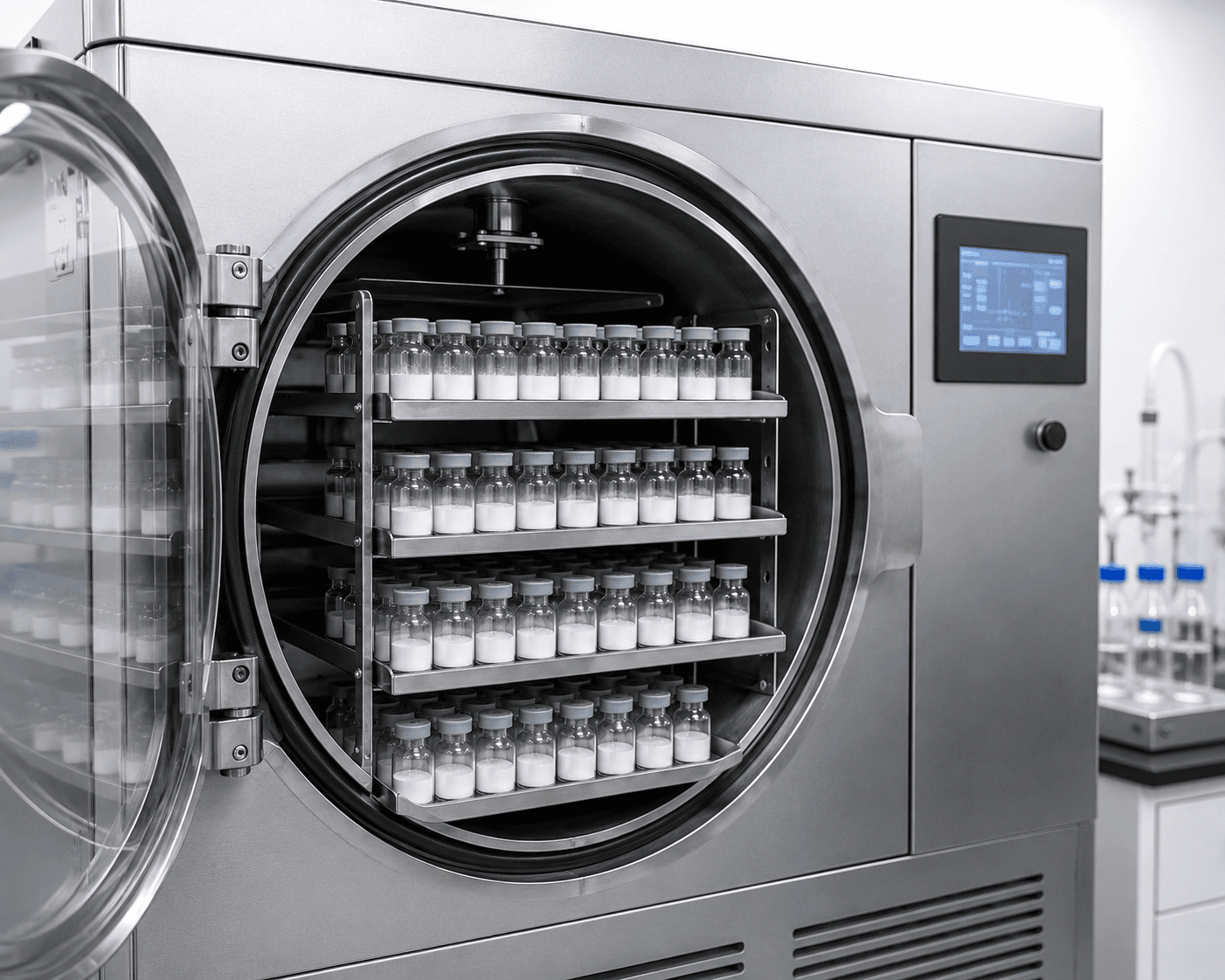
Performance Peptides Canada supplies lyophilised peptides verified by independent HPLC and MS, with batch-specific downloadable COAs, fulfilled entirely within Canada. BPC-157 research-grade and TB-500 Canada are both available with full purity documentation. The peptide COA reading guide explains how to interpret HPLC and MS data before ordering.
PDCs are molecular constructs that link a cytotoxic drug to a short peptide via a chemical linker. The peptide binds selectively to receptors overexpressed on cancer cells in preclinical models, directing the payload to the target site. They are studied as a targeted drug delivery strategy in in-vitro and in vivo oncology research.
Both share the same three-part architecture, but PDCs use short peptide sequences (1–10 kDa) as the targeting vehicle rather than monoclonal antibodies (~150 kDa). PDCs are smaller, synthesised more readily, cleared faster renally, and carry lower immunogenicity risk. ADCs have longer half-lives and more clinical validation. The right choice depends on the research application.
Bombesin/GRP-R, somatostatin receptors (SSTR), and the EGFR family account for the majority of published preclinical PDC work. Each is overexpressed across specific cancer types, and receptor selection drives downstream decisions, including linker design and expected biodistribution profile.
Most PDCs remain investigational. The exception is Lutathera (177Lu-DOTATATE), approved for specific neuroendocrine tumour subtypes. Outside of approved clinical products, PDCs are not approved for human use in Canada. All compounds discussed here are supplied for in-vitro laboratory and independent research use only, consistent with Health Canada guidelines.
Peer-reviewed PDC protocols typically specify HPLC purity of 98%+ with MS confirmation of molecular identity. Batch-specific documentation is essential; a generic COA reused across lots cannot confirm consistency.
International shipments introduce cold-chain risk, customs delays, and potential purity inconsistencies from extended transit. Each factor adds uncontrolled variability to a research protocol. Domestic supply eliminates customs risk and preserves cold-chain integrity from facility to researcher, a meaningful operational advantage for longitudinal study designs.
Research Use Only Disclaimer
All content on this page is intended strictly for informational and educational purposes related to in-vitro and preclinical research. Peptide-drug conjugates and related compounds discussed herein are not approved for human use by Health Canada, the FDA, or any other regulatory authority unless explicitly stated. Nothing in this article constitutes medical advice, a treatment protocol, or a recommendation for human or veterinary administration. Performance Peptides Canada supplies research-grade peptide compounds for laboratory and independent scientific research use only, in compliance with applicable Canadian regulations.
Experience unparalleled research integrity with 99%+ purity guaranteed via third-party HPLC testing, supported by 100% domestic Canadian fulfillment and expert technical guidance for every reconstitution and storage inquiry.