
Have a question about a compound, reconstitution protocol, or COA? Our analytical team responds within one business day.
Peptides’ blood-brain barrier interactions are a growing area of preclinical research, and understanding how that barrier works is essential for interpreting CNS study data correctly. This article breaks down the BBB’s structure, the mechanisms that govern peptide transport, and what published studies say about compounds like BPC-157.
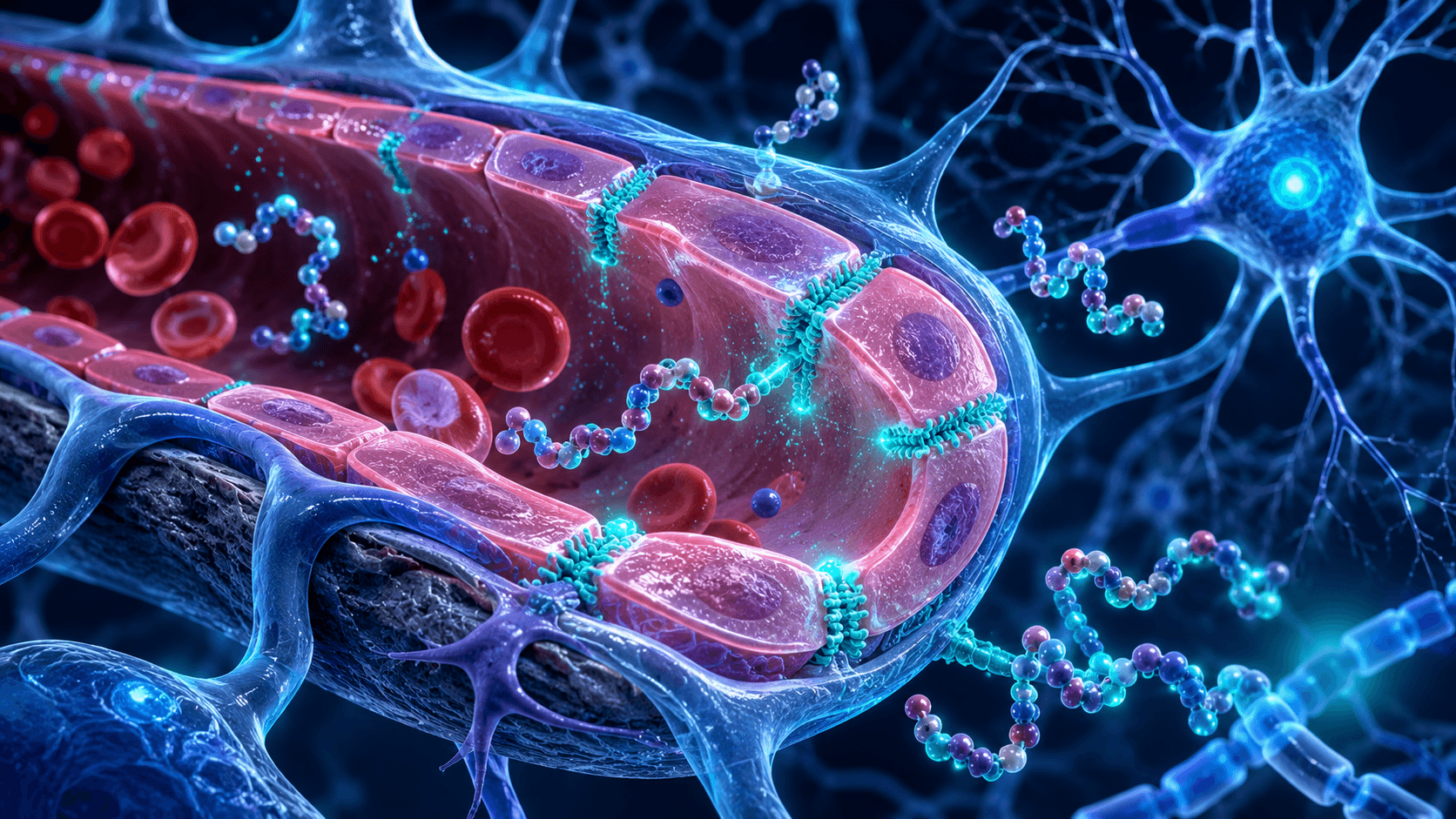
The blood-brain barrier (BBB) is a highly selective membrane that separates circulating blood from the brain and central nervous system (CNS). It’s made up of tightly packed endothelial cells that line the brain’s blood vessels, supported by pericytes, astrocytes, and a basement membrane.
Its job is protective. The BBB filters out pathogens, toxins, and large molecules that could disrupt brain function. Only certain substances can pass through, typically small, fat-soluble molecules or compounds that are actively transported across.
That selectivity is both the barrier’s strength and the central challenge in CNS research. Delivering compounds to the brain requires either exploiting existing transport pathways or designing molecules that can cross the barrier on their own.
Peptides are short chains of amino acids. Most peptides are hydrophilic (water-attracting), which typically makes crossing the BBB difficult; the barrier strongly favours lipophilic (fat-soluble) molecules that can diffuse through the cell membrane directly.
That said, peptide-BBB interaction is more nuanced than a simple pass/fail. Several mechanisms are studied in preclinical models:
Applies to very small, lipophilic peptides that can slip through the membrane without assistance. Size and fat-solubility are the key variables here.
One of the more researched transport pathways. Certain receptors on brain endothelial cells, including transferrin and LDL receptors, can bind specific peptides and carry them across the barrier. Research into BBB-penetrating peptides increasingly focuses on designing sequences that exploit these receptor systems.
Involves positively charged peptides binding non-specifically to the cell surface, triggering uptake. This is a less targeted mechanism but has been observed with several cationic peptide sequences in in-vitro models.
Understanding which mechanism a peptide uses, if any, is essential for interpreting preclinical CNS data accurately.
BBB permeability isn’t fixed. It can change in response to inflammation, injury, oxidative stress, and disease states. This is relevant to peptide research because conditions that alter barrier integrity also change how compounds distribute across it.
In healthy tissue, the tight junctions between endothelial cells keep permeability low. In models of ischemia, traumatic brain injury, or neuroinflammation, those junctions can loosen, a phenomenon researchers refer to as increased BBB permeability.
This has practical implications. A peptide that shows limited CNS distribution under baseline conditions in an animal model may behave differently in a compromised-barrier scenario. Preclinical studies often test compounds in both contexts, and interpreting results correctly requires knowing which conditions were applied.
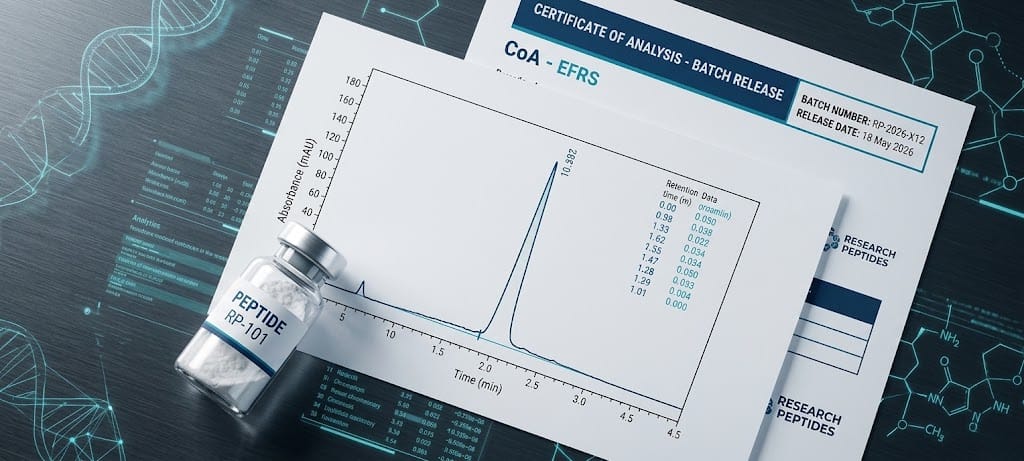
For researchers building experimental protocols, a batch-specific COA matters here; confirming compound identity and purity before interpreting CNS distribution data is basic good practice.
BPC-157 (Body Protection Compound-157) is a synthetic pentadecapeptide whose amino acid sequence is based on a protective protein naturally present in gastric juice. It has been studied across a range of preclinical models, and several of those studies touch on CNS-related outcomes.
One line of research involves serotonin synthesis. A 2004 study published in Life Sciences used alpha-methyl-L-tryptophan autoradiographic measurements to observe that peripherally administered BPC-157 affected region-specific serotonin synthesis rates in rats, including increased synthesis in the substantia nigra and decreased rates in the dorsal thalamus and hippocampus. The same research noted effects on the dopaminergic system, including in models of neurotoxin exposure.
A 2020 study published in Brain and Behavior examined BPC-157 in a rat model of hippocampal ischemia/reperfusion injury. The researchers observed that BPC-157 influenced nitric oxide synthase pathways, specifically the NOS3/NOS1/NOS2 interplay, in a manner associated with regulating cerebral microvascular tone and protecting BBB integrity under ischemic conditions.
A separate preclinical study on traumatic brain injury in mice found that BPC-157 improved outcomes across multiple injury severities when administered prophylactically or immediately before injury.
All of this work is preclinical. No human clinical trials have confirmed these mechanisms in humans, and BPC-157 is not approved for human use by Health Canada or any regulatory body. These findings are relevant to in-vitro and animal model research only.
BPC-157 isn’t the only compound studied in the context of CNS and BBB research.
TB-500 (Thymosin Beta-4) has been studied for its role in angiogenesis and tissue repair. Some preclinical work has explored its distribution and potential CNS activity, though BBB-specific transport data is less established compared to BPC-157.
KPV, a tripeptide derived from alpha-MSH, is notable for its small size, making it a candidate for passive diffusion studies. Its anti-inflammatory properties have attracted interest in CNS inflammation models.
Neuroprotective peptides as a class are an active area of research precisely because the BBB makes CNS drug delivery so difficult. Identifying peptide sequences that can navigate the barrier without compromising it is a significant goal in neurological disease research.
Researchers sourcing compounds for CNS-adjacent studies should prioritise purity documentation. Contaminants or degradation products can confound results, particularly when studying low-concentration effects in sensitive CNS models.
The blood-brain barrier is not just a pharmacological obstacle. It’s a model system for understanding how the CNS regulates its own environment and how that regulation breaks down in disease.
Peptide research that touches on BBB interactions sits at the intersection of neurochemistry, vascular biology, and pharmacokinetics. Results in this space can inform understanding of neuromodulation, neuroprotection, and CNS drug delivery strategy.
For independent researchers and biohackers following this literature, the key takeaway is methodological: BBB permeability data from animal models doesn’t translate directly to human biology. Species differences in BBB composition, tight junction density, and transporter expression all affect how results should be interpreted.
Preclinical findings are hypothesis-generating. They point researchers toward mechanisms worth studying further; they don’t confirm clinical outcomes.
Peptide purity is especially critical in CNS-adjacent research. The BBB itself is a highly sensitive system, and working with compounds that carry impurities or degradation products introduces variables that are difficult to account for.
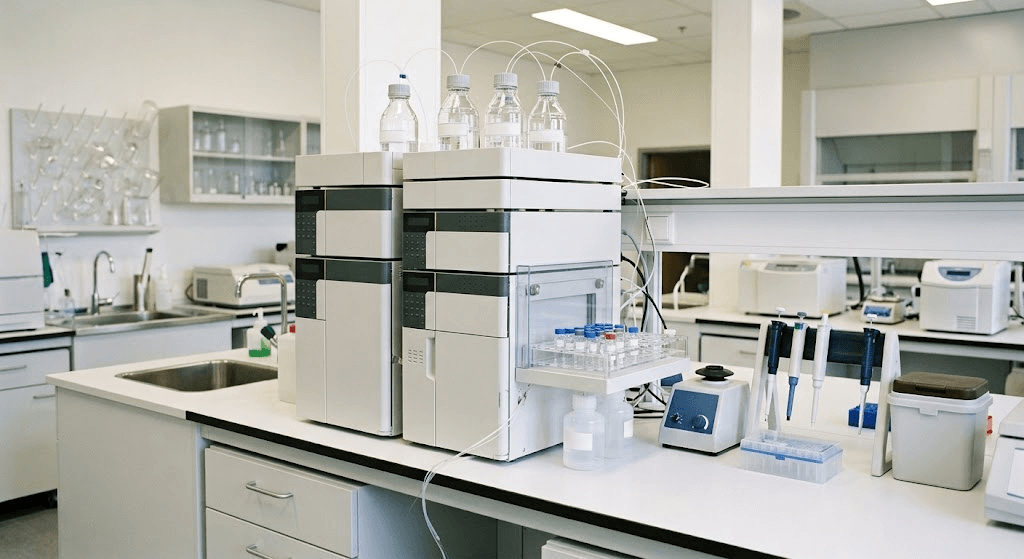
At Performance Peptides Canada, every compound in the Biovantage Labs catalogue is independently tested to 99%+ purity using HPLC and mass spectrometry. Batch-specific COAs are available for download on each product page, not generic certificates reused across lots.
All orders ship domestically from climate-controlled facilities within Canada. No customs delays, no cold-chain interruptions, no sourcing uncertainty.
All compounds are supplied strictly for in-vitro laboratory and research use only, in compliance with Health Canada guidelines. They are not approved for human use.
View the full research catalogue and download COAs before you order.
Some peptides can cross the BBB, depending on their size, lipophilicity, and the transport mechanisms available. Small, lipophilic peptides may cross via passive diffusion. Others interact with receptor-mediated transcytosis pathways on brain endothelial cells. Whether a specific peptide crosses the BBB, and to what degree, is determined through preclinical in-vitro and animal model testing.
Preclinical research suggests peripherally administered BPC-157 may influence CNS pathways, including effects on brain serotonin synthesis and neuroprotective outcomes in ischemia models. The precise transport mechanism has not been fully established in published literature. All findings are from animal models; BPC-157 is not approved for human use.
Key factors studied in preclinical models include molecular weight (smaller tends to penetrate more readily), lipophilicity, charge, and structural features that allow binding to BBB receptors. Researchers also study chemically modified peptides designed to improve BBB penetration for CNS drug delivery applications.
BBB permeability refers to how readily substances move across the blood-brain barrier. Under normal conditions, the BBB is tightly regulated. In states of injury, inflammation, or disease, permeability can increase. This matters in peptide research because a compound’s CNS distribution profile may differ significantly between healthy and compromised-barrier conditions , affecting how preclinical data should be interpreted.
Performance Peptides Canada supplies HPLC and MS-verified research peptides under the Biovantage Labs brand, shipped domestically across Canada. All compounds include downloadable batch-specific COAs. Products are supplied for in-vitro and laboratory research use only, in compliance with Health Canada guidelines.
Disclaimer: All compounds supplied by Performance Peptides Canada are intended strictly for in-vitro laboratory and research use only. They are not approved for human use and are not intended to diagnose, treat, cure, or prevent any condition. This content is for educational and research reference purposes only, in compliance with Health Canada guidelines.
Experience unparalleled research integrity with 99%+ purity guaranteed via third-party HPLC testing, supported by 100% domestic Canadian fulfillment and expert technical guidance for every reconstitution and storage inquiry.