
The Role of GHK-Cu in Extracellular Matrix Remodeling

quick contact

Have a question about a compound, reconstitution protocol, or COA? Our analytical team responds within one business day.


our social medias

Facebook
Twitter
LinkedIn

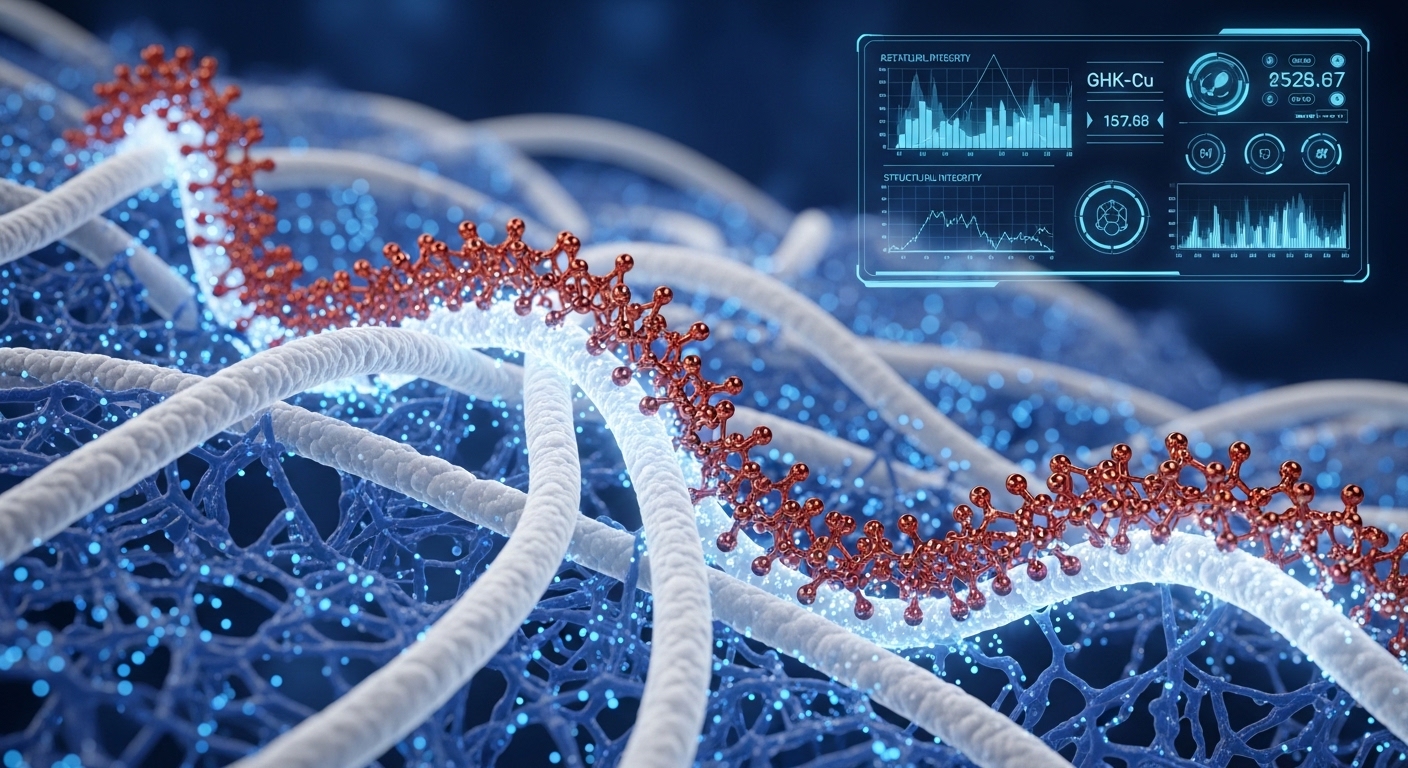
The Extracellular Matrix (ECM) is more than a structural scaffold; it is a dynamic signaling environment that dictates cellular behavior. As organisms age, this matrix becomes fragmented and disorganized, leading to impaired healing and systemic tissue decline. GHK-Cu (Glycyl-L-Histidyl-L-Lysine Copper) is a naturally occurring tripeptide that acts as a primary regulator of ECM remodeling. It functions by resetting the gene expression of over 4,000 human genes to a more youthful state, specifically balancing the activity of Matrix Metalloproteinases (MMPs) and their inhibitors (TIMPs). This dual action ensures that damaged proteins are removed while new, high-quality collagen and elastin are synthesized, effectively ‘rebuilding’ the architectural integrity of the tissue.

The “Architect” of Collagen

GHK-Cu is renowned for its ability to stimulate fibroblasts, the primary cells responsible for ECM production.

  • Collagen I & III: Research in 2025-2026 confirms that GHK-Cu increases collagen synthesis by up to 70%. It promotes the formation of both Type I (structural) and Type III (repair) collagen.
  • The Copper Cofactor: As a copper-binding peptide, GHK-Cu delivers essential Cu(II) ions to lysyl oxidase (LOX), the enzyme responsible for cross-linking collagen and elastin. Without this cross-linking, the ECM remains weak and susceptible to rapid breakdown.
  • Decorin Upregulation: GHK-Cu stimulates the production of decorin, a small proteoglycan that prevents “collagen bundling” (scars) and ensures fibers are laid down in a functional, organized lattice.

MMP vs. TIMP: The Regulatory Balance

The most unique feature of GHK-Cu is its ability to modulate both the synthesis and the breakdown of the matrix.

  • MMP Regulation: Matrix Metalloproteinases (MMPs) are enzymes that “chew up” old or damaged proteins. GHK-Cu can upregulate specific MMPs (like MMP-2) to clear out debris during wound healing, while downregulating others (like MMP-1) in aged skin to prevent excessive thinning.
  • TIMP Shielding: Simultaneously, it increases the expression of Tissue Inhibitors of Metalloproteinases (TIMP-1 and TIMP-2). These act as shields, preventing MMPs from destroying healthy, newly formed tissue.

SOP Note: This balance is why GHK-Cu is categorized as a “remodeling” agent rather than a simple growth stimulant. It optimizes the quality of the tissue, not just the quantity.

Beyond the Skin: Systemic ECM Remodeling

While often discussed in dermatology, GHK-Cu’s impact on the ECM extends to multiple organ systems:

  • Pulmonary Health: Studies show GHK-Cu can reverse the gene expression signature of COPD, helping to repair the lung’s connective tissue.
  • Bone & Tendon: By promoting glycosaminoglycan (GAG) synthesis, it supports the remodeling of the boney matrix and ligamentous tissue, a key area of study for Canadian sports medicine in 2026.
  • Nerve Regeneration: The peptide supports the ECM environment necessary for neurite outgrowth, aiding in peripheral nerve repair protocols.

The “99% Purity” Mandate

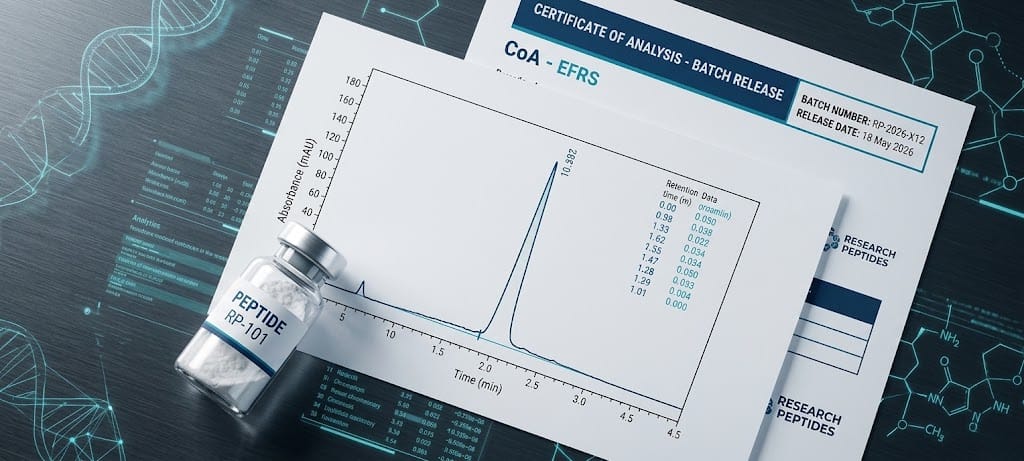
“In our QC audits of Canadian GHK-Cu batches, we often find that the ‘Copper-to-Peptide’ ratio is off. For GHK to be effective, it must be fully chelated with copper (the blue tint). If your GHK-Cu powder is a pale or off-white color, it lacks the copper ions required for LOX enzyme activation. At Performance Peptides Canada, we utilize X-ray crystallography to ensure a perfect 1:1 copper-to-peptide coordination, ensuring the ‘Gene-Reset’ mechanism is fully operational for your research.”

Summary for 2026 Researchers

  • Phase 1: GHK-Cu attracts immune cells to clear the site of injury.
  • Phase 2: It stimulates fibroblasts to produce a fresh matrix of collagen and GAGs.
  • Phase 3: It regulates MMPs/TIMPs to refine the tissue, preventing fibrosis (scarring) and restoring elasticity.

References

  1. Journal of Peptide Science (2025): “GHK-Cu and the Genomic Reset: A Review of Matrixin Activity.”
  2. Pickart, L. et al. (2018/2026 Update): “Regenerative and Protective Actions of the GHK-Cu Peptide in the Light of New Gene Data.”
  3. Wound Repair and Regeneration: “The role of copper peptides in modulating the MMP-TIMP axis.”
  4. Health Canada Biotech Registry: “Standards for synthetic tripeptide-copper complexes in regenerative research.”

Leave a Reply

Your email address will not be published. Required fields are marked *

Performance Peptides Canada

Experience unparalleled research integrity with 99%+ purity guaranteed via third-party HPLC testing, supported by 100% domestic Canadian fulfillment and expert technical guidance for every reconstitution and storage inquiry.