Have a question about a compound, reconstitution protocol, or COA? Our analytical team responds within one business day.

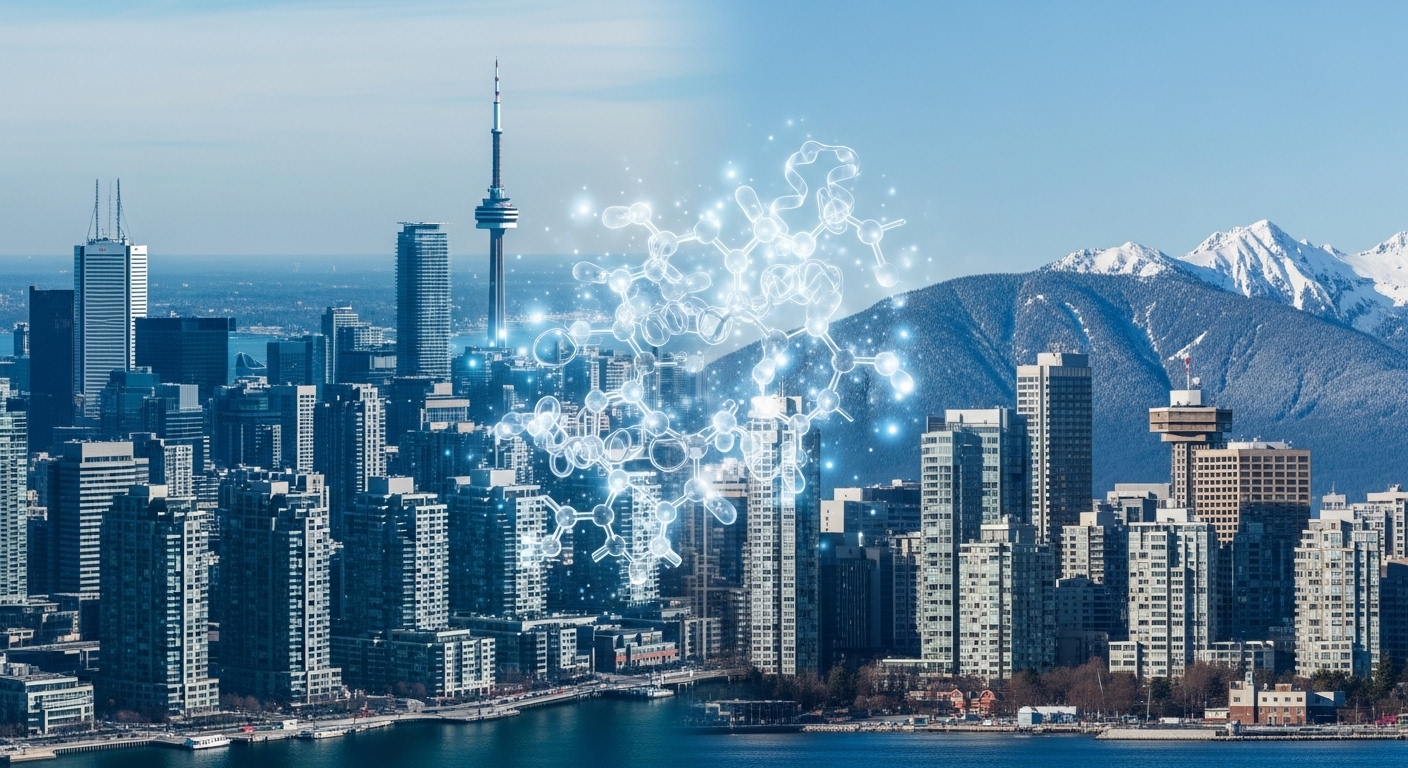
Canada has emerged as a global leader in the “Biotech Renaissance” of 2026, with peptide science serving as the catalyst for breakthroughs in regenerative medicine and metabolic health. This innovation is concentrated in two primary geographic powerhouses: Toronto’s Discovery District and Vancouver’s Broadway-Mount Pleasant corridor. These hubs represent a synergy of academic excellence led by the University of Toronto and UBC, and private venture capital. For researchers, these hubs provide the infrastructure for advanced peptide synthesis, high-throughput screening, and the clinical translation of novel sequences like MOTS-c and Tesamorelin.
The Discovery District in downtown Toronto is one of the highest-concentrated research zones in the world. Centered around the MaRS Discovery District and the University Health Network (UHN), this hub is the epicenter of Canadian peptide oncology and cardiovascular research.
While Toronto focuses on clinical scale, Vancouver has carved out a niche as the world leader in peptide delivery systems, specifically lipid nanoparticle (LNP) technology.
| Feature | Toronto (Discovery District) | Vancouver (Biotech Corridor) |
| Primary Specialization | Oncology & Metabolic Peptides | Neuro-Peptides & Delivery Systems |
| Key Academic Partner | University of Toronto / UHN | University of British Columbia (UBC) |
| Infrastructure Highlight | MaRS Discovery District | Life Sciences Institute (LSI) |
| Economic Driver | Large-scale Clinical Trials | Early-stage IP & Nanotech |
As a Senior Biotech Analyst, I have noted that the success of these hubs is inextricably linked to the reliability of their supply chains. In 2026, the reliance on international imports has dwindled in favor of Domestic Canadian Fulfillment.
“During the 2025 supply chain disruptions, research labs in Vancouver that relied on international shipments saw a 30% increase in batch failures due to fluctuating temperatures at the border. Conversely, hubs utilizing domestic Toronto-based or Vancouver-based inventory maintained 100% data integrity. For a PI (Principal Investigator) in these hubs, the proximity of the supplier isn’t just about speed, it’s about the verifiable stability of the peptide’s primary structure.”
The future of Canadian biotech is not a competition between Toronto and Vancouver, but a collaborative network. As we move deeper into 2026, the integration of Toronto’s clinical data with Vancouver’s delivery technology is positioning Canada as a “Peptide Superpower,” capable of solving the most complex challenges in human physiology.
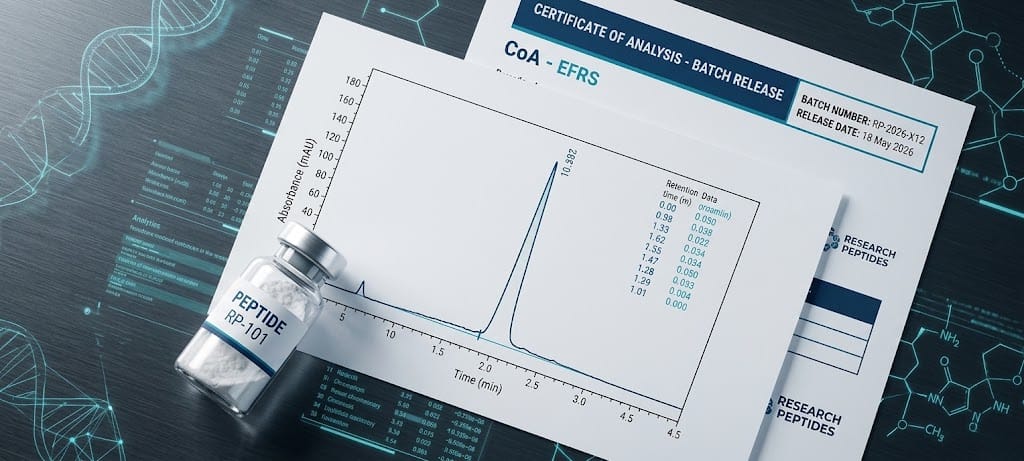
Experience unparalleled research integrity with 99%+ purity guaranteed via third-party HPLC testing, supported by 100% domestic Canadian fulfillment and expert technical guidance for every reconstitution and storage inquiry.