- FREE Shipping with spend over $150
- We've moved! performancepeptidescanada.co same team, same products, same quality.
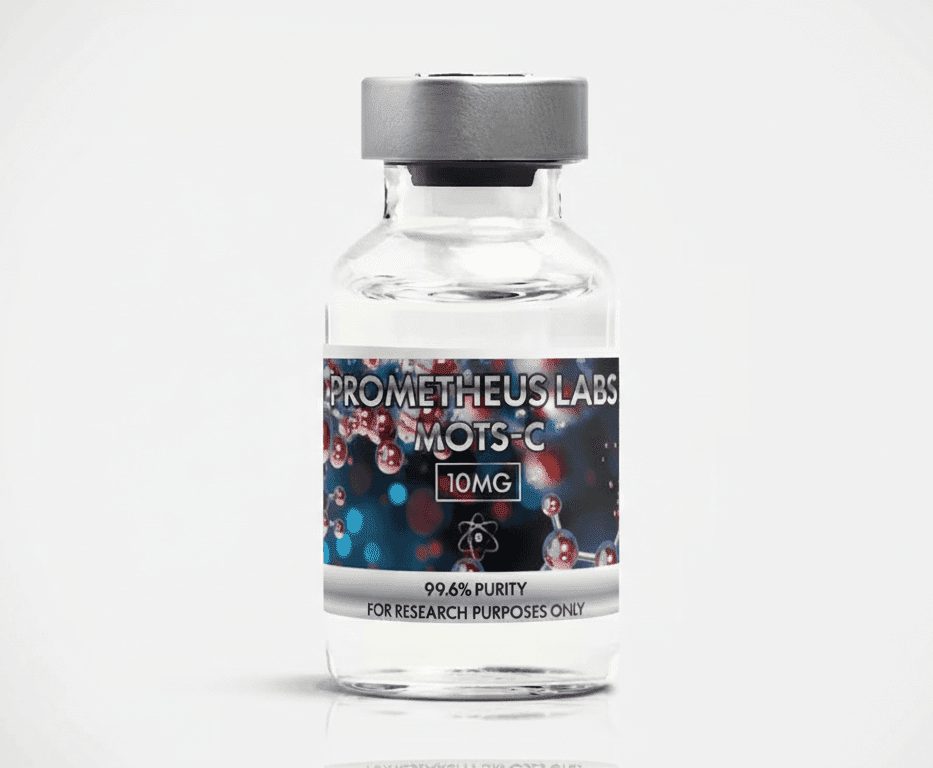
$250.00
MOTS-c is a 16-amino acid mitochondrial-derived peptide (MDP) encoded within the mitochondrial 12S ribosomal RNA gene. Unlike traditional hormones, MOTS-c acts as a “mitokine,” translocating to the nucleus in response to metabolic stress to regulate nuclear gene expression. In laboratory research, it is the primary entity for investigating the mitochondrial-nuclear communication axis and its impact on systemic metabolism and cellular aging.
Performance Peptides Canada provides MOTS-c 40mg vials at 99%+ HPLC-verified purity. Our domestic Canadian fulfillment ensures that this sensitive metabolic regulator is shipped with speed and climate integrity for advanced mitochondrial research.
Our MOTS-c is synthesized to the following analytical benchmarks:
MOTS-c is studied for its unique ability to mimic the beneficial effects of exercise at a cellular level.
MOTS-c is a potent activator of the AMP-activated protein kinase (AMPK) pathway. By increasing the levels of AICAR (an intermediate in the purine salvage pathway), MOTS-c enhances glucose uptake in skeletal muscle and inhibits gluconeogenesis in the liver. Researchers utilize this peptide to study the restoration of insulin sensitivity and the reversal of diet-induced metabolic dysfunction.
Under conditions of metabolic stress (such as exercise or nutrient deprivation), MOTS-c translocates from the mitochondria to the nucleus. There, it interacts with ARE (Antioxidant Response Element)-containing genes to regulate the cellular stress response. This unique “retrograde signaling” is a vital area of study for researchers interested in mitohormesis and genomic stability.
Research indicates that MOTS-c promotes the beta-oxidation of fatty acids and influences the “browning” of white adipose tissue. By upregulating UCP1 (Uncoupling Protein 1), it is studied for its role in increasing thermogenesis and whole-body energy expenditure, making it an essential tool for obesity and lipid metabolism research.
As a mitochondrial-derived peptide, MOTS-c is highly sensitive to pH and temperature:
| Storage Condition | Physical State | Estimated Stability |
| -20°C (Freezer) | Lyophilized (Dry) | 24+ Months |
| 2°C to 8°C (Fridge) | Lyophilized (Dry) | 12 Months |
| 2°C to 8°C (Fridge) | Reconstituted | 5–7 Days |
Note: For maximal potency in research, it is recommended to use MOTS-c shortly after reconstitution, as mitochondrial peptides can be more susceptible to enzymatic degradation than standard signaling peptides.
Q: Is MOTS-c considered an “exercise mimetic”?
A: Yes. In research models, MOTS-c has been shown to produce metabolic changes similar to those induced by aerobic exercise, including improved glucose disposal and increased mitochondrial biogenesis.
Q: What is the purity of your MOTS-c?
A: Every batch of MOTS-c 40mg from Performance Peptides Canada is verified to be 99% pure or higher via HPLC and Mass Spectrometry.
Q: Why is domestic Canadian shipping important for MOTS-c?
A: MOTS-c is a complex peptide that requires stable environmental conditions. Shipping from within Canada avoids the extreme temperature fluctuations and customs delays that can occur with international orders, ensuring the peptide arrives in its most active form.
Only logged in customers who have purchased this product may leave a review.


Explore premium-grade peptides for scientific research, purity tested, lab certified, and shipped discreetly.

Automated page speed optimizations for fast site performance

Reviews
There are no reviews yet.