- FREE Shipping with spend over $150
- We've moved! performancepeptidescanada.co same team, same products, same quality.

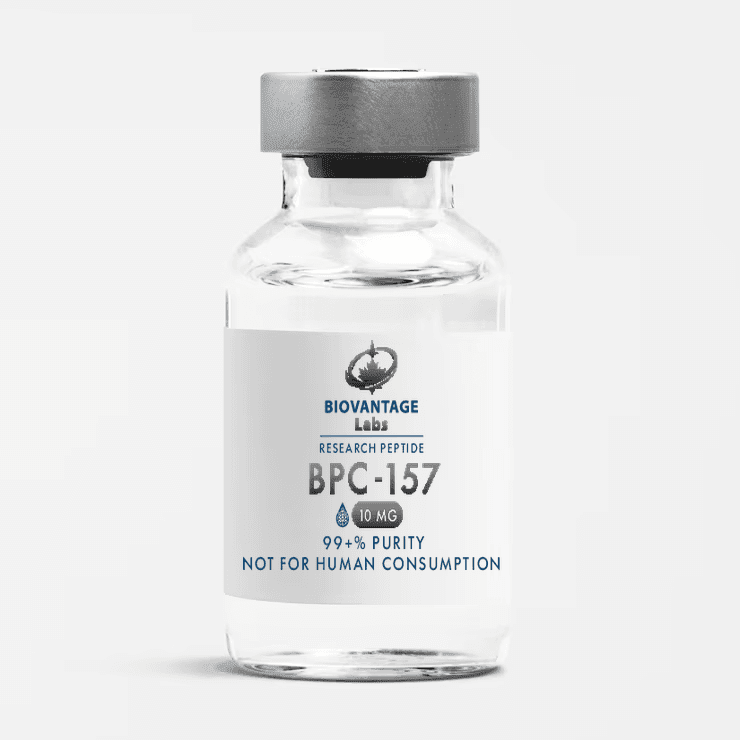
BPC-157 (Body Protection Compound 157) is a synthetic 15-amino acid pentadecapeptide derived from a protective protein sequence found in human gastric juice. Its molecular stability, notably its resistance to enzymatic degradation in acidic environments, makes it a well-studied primary entity in tissue repair, vascular, and musculoskeletal research.
Biovantage Labs provides BPC-157 at 99+% purity, confirmed by batch-specific HPLC and Mass Spectrometry analysis, as a lyophilized compound for use in controlled laboratory settings.
| Specification | Detail |
| Molecular Formula | C62H98N16O22 |
| Molecular Weight | 1,419.5 Da |
| Sequence | Gly-Glu-Pro-Pro-Pro-Gly-Lys-Pro-Ala-Asp-Asp-Ala-Gly-Leu-Val |
| Purity | ≥99+% (HPLC/MS verified) |
| Physical Form | Lyophilized white powder |
| CAS Number | 137525-51-0 |
BPC-157 is investigated across several interconnected biological pathways. Each mechanism represents an active area of in vitro and in vivo research.
Researchers examining tissue repair signalling frequently study BPC-157 alongside TB-500 (Thymosin Beta-4 Fragment) as a complementary compound acting via the actin sequestration and cytoskeletal regulation pathway, a mechanistically distinct but convergent approach to extracellular matrix remodelling research.
For protocols examining the inflammatory resolution axis alongside repair signalling, KPV is studied in the same research context for its NF-kB inhibitory and gut epithelial barrier properties.
Experimental models indicate BPC-157 activates the FAK-paxillin pathway, enhancing phosphorylation of focal adhesion kinase and promoting fibroblast migration at injury sites. This mechanism is central to extracellular matrix reconstruction studies.
BPC-157 has demonstrated pro-angiogenic activity in research models through increased expression of Vascular Endothelial Growth Factor Receptor 2 (VEGFR2). This pathway is studied for its potential to restore perfusion in ischaemic tissue models by promoting collateral vessel formation.
In musculoskeletal research, BPC-157 shows dose-dependent upregulation of Growth Hormone Receptors (GHR) in tendon fibroblast cultures. This interaction is examined in the context of collagen synthesis and biomechanical recovery protocols.
BPC-157 interacts with the nitric oxide (NO) system, a pathway with broad implications across vascular tone regulation, inflammatory signalling, and cytoprotection research models.
| Storage Condition | State | Estimated Stability |
| -20°C to -80°C | Lyophilized | 24+ months |
| 2°C to 8°C | Lyophilized | 12 months |
| Room temperature (20°C) | Lyophilized | 3 months |
| 2°C to 8°C | Reconstituted | 7 to 14 days |
Store in a desiccated environment away from UV exposure. Avoid repeated freeze-thaw cycles, which degrade peptide chain integrity over time.
Q: Is BPC-157 stable in acidic environments?
A: Yes. BPC-157 demonstrates notable resistance to degradation in gastric acid across experimental timeframes, a property that distinguishes it from most peptides and makes it a subject of oral bioavailability research in animal models.
Q: What purity standard does Biovantage Labs apply to BPC-157?
A: Every batch is verified at 99+% purity using HPLC to confirm compound concentration and Mass Spectrometry to confirm molecular identity. Batch-specific COA documentation is available upon request.
Q: Where does Biovantage Labs ship from?
A: All Biovantage Labs products are fulfilled domestically from within Canada, eliminating customs clearance risk and reducing transit time compared to international suppliers.
Q: Is BPC-157 for human use?
A: No. BPC-157 supplied by Biovantage Labs is strictly for laboratory research purposes. It is not approved for human consumption, veterinary use, or clinical application.
| Weight | 10mg |
|---|
Only logged in customers who have purchased this product may leave a review.


Reviews
There are no reviews yet.