- FREE Shipping with spend over $150
- We've moved! performancepeptidescanada.co same team, same products, same quality.
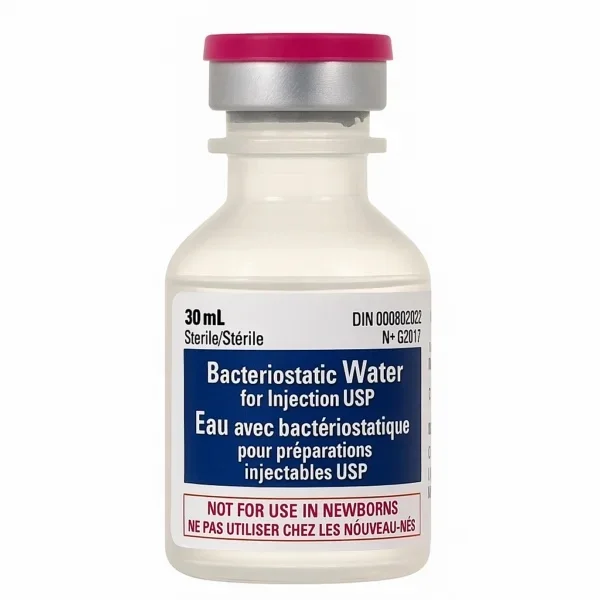
Bacteriostatic Water for Injection USP (30mL) is a sterile preparation of water containing 0.9% benzyl alcohol as a bacteriostatic preservative, registered with Health Canada under DIN 000802022. It is the standard pharmaceutical-grade diluent used for reconstituting lyophilized compounds in laboratory and research settings. Sterile, multi-dose, and domestically sourced. Not for use in newborns.
$25.00
Bacteriostatic Water for Injection USP is a sterile, non-pyrogenic preparation of water for injection containing 0.9% benzyl alcohol as an antimicrobial preservative. Registered with Health Canada under DIN 000802022, it meets United States Pharmacopeia (USP) standards for sterility, endotoxin limits, and pH the same standards applied to pharmaceutical-grade injectable preparations.
It is the diluent of choice for reconstituting lyophilized peptides and other compounds in research and laboratory settings, providing a stable, multi-dose solution that resists bacterial contamination between uses.
| Specification | Detail |
| Volume | 30mL per vial |
| Preservative | 0.9% Benzyl Alcohol (w/v) |
| Standard | United States Pharmacopeia (USP) |
| Sterility | Non-pyrogenic, sterile |
| DIN | 000802022 |
| Format | Multi-dose vial |
| pH | 4.5 to 7.0 |
When reconstituting lyophilized peptide compounds for laboratory use, diluent selection directly affects both the stability of the reconstituted solution and the viable research window after reconstitution.
Benzyl alcohol as a bacteriostatic preservative inhibits the growth of bacteria introduced during repeated needle insertions into a multi-dose vial a critical property when a single vial will be accessed multiple times over an extended research period. Sterile water without a preservative does not provide this protection and should only be used for single-dose applications.
Compared to sterile saline (0.9% sodium chloride), bacteriostatic water is the preferred diluent for most lyophilized peptides because the absence of sodium chloride reduces the risk of aggregation in compounds sensitive to ionic strength. For peptides where solubility is challenging, the slightly acidic pH range of bacteriostatic water (4.5 to 7.0) can also assist initial dissolution.
The following protocol applies when using bacteriostatic water to reconstitute lyophilized research compounds:
| Condition | Detail |
| Unopened | Store at room temperature (15°C to 30°C), away from direct light |
| After first use | Store at room temperature or refrigerated (2°C to 8°C) |
| Do not freeze | Freezing may compromise vial integrity and sterility |
Q: What is the difference between bacteriostatic water and sterile water for injection?
A: Sterile water for injection contains no preservative and is intended for single-dose use only. Bacteriostatic water contains 0.9% benzyl alcohol, which inhibits bacterial growth and allows the vial to be accessed multiple times safely over an extended period. For research applications requiring repeated withdrawals from a single vial, bacteriostatic water is the appropriate choice.
Q: Can bacteriostatic water be used to reconstitute all lyophilized peptides?
A: Bacteriostatic water is compatible with the majority of lyophilized research peptides. For compounds with specific pH sensitivity or known incompatibility with benzyl alcohol, the compound’s technical documentation should be consulted before selecting a diluent. When in doubt, sterile saline (0.9% sodium chloride) is an alternative for single-use reconstitutions.
Q: How long does a reconstituted peptide remain stable when diluted with bacteriostatic water?
A: Reconstituted stability varies by compound. As a general guideline, most lyophilized peptides reconstituted with bacteriostatic water remain stable for 7 to 14 days when stored at 2°C to 8°C. Individual compound stability data should be referenced for precise windows.
Q: Is this product Health Canada approved?
A: Yes. This Bacteriostatic Water for Injection USP is registered with Health Canada under Drug Identification Number (DIN) 000802022, confirming it meets Canadian regulatory standards for sterile injectable pharmaceutical preparations.
Q: Where does this product ship from?
A: This product is fulfilled domestically from within Canada.
Only logged in customers who have purchased this product may leave a review.

Explore premium-grade peptides for scientific research, purity tested, lab certified, and shipped discreetly.

Automated page speed optimizations for fast site performance

Reviews
There are no reviews yet.