- FREE Shipping with spend over $150
- We've moved! performancepeptidescanada.co same team, same products, same quality.

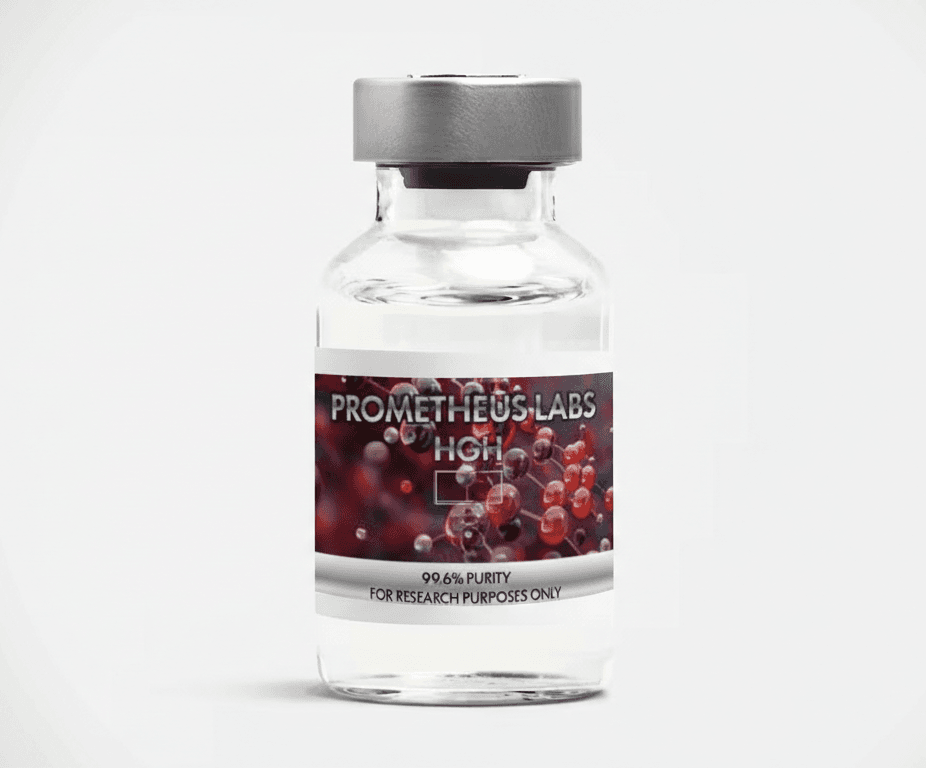
Human Growth Hormone (HGH), also known as Somatropin, is a 191-amino acid, single-chain polypeptide produced by the somatotropic cells of the anterior pituitary gland. In research environments, HGH is a fundamental entity for studying the regulation of postnatal growth, protein synthesis, and lipid metabolism through the stimulation of Insulin-like Growth Factor 1 (IGF-1).
Performance Peptides Canada provides 15iu 10 vial kits of HGH, synthesized to a 99%+ purity level. Our HGH is guaranteed to be the authentic 191-amino acid sequence, ensuring researchers avoid the inflammatory responses associated with inferior 192-amino acid variants.
Our Somatropin is synthesized using recombinant DNA technology to match the endogenous human protein exactly:
HGH research is primarily centered on the GH/IGF-1 axis and its systemic anabolic effects.
Once introduced to a biological model, HGH binds to the Growth Hormone Receptor (GHR), primarily in the liver. This triggers the JAK2/STAT5 signaling pathway, leading to the synthesis and release of IGF-1. Researchers utilize HGH to observe the secondary effects of IGF-1 on peripheral tissues, including muscle hyperplasia and chondrocyte proliferation.
HGH is a potent “partitioning agent.” It is investigated for its ability to stimulate lipolysis in adipose tissue by increasing the sensitivity of adipocytes to catecholamines. Simultaneously, it promotes nitrogen retention and amino acid uptake in skeletal muscle, making it a critical entity for researching metabolic syndrome and body composition regulation.
Research in gerontology and sports medicine focuses on HGH’s ability to upregulate type I and type III collagen synthesis. This makes it a vital tool for studying the mechanical strength of tendons, ligaments, and bone matrix in aging or injury models.
HGH is an extremely fragile large-chain protein; improper handling can easily result in denatured, inactive protein.
| Storage Condition | Physical State | Estimated Stability |
| -20°C (Freezer) | Lyophilized (Dry) | 24 Months |
| 2°C to 8°C (Fridge) | Lyophilized (Dry) | 12 Months |
| 2°C to 8°C (Fridge) | Reconstituted | 10–14 Days |
Storage Note: Once reconstituted, HGH must be kept in the refrigerator 2°C to 8°C. Stability drops significantly if the solution is left at room temperature for more than a few hours.
Q: Why is the 191-amino acid sequence important?
A: Endogenous human growth hormone is 191 amino acids long. Some cheaper manufacturing processes produce a 192-amino acid version (methionyl-HGH). The extra amino acid can cause the body to produce antibodies against the hormone, rendering the research results invalid and potentially causing an immune reaction in the model.
Q: Is your HGH shipped domestically in Canada?
A: Yes. Performance Peptides Canada fulfills all HGH orders from our Canadian facilities. This is crucial for HGH, as it is highly sensitive to the temperature fluctuations and long transit times typical of international shipping.
Q: How do I verify the purity?
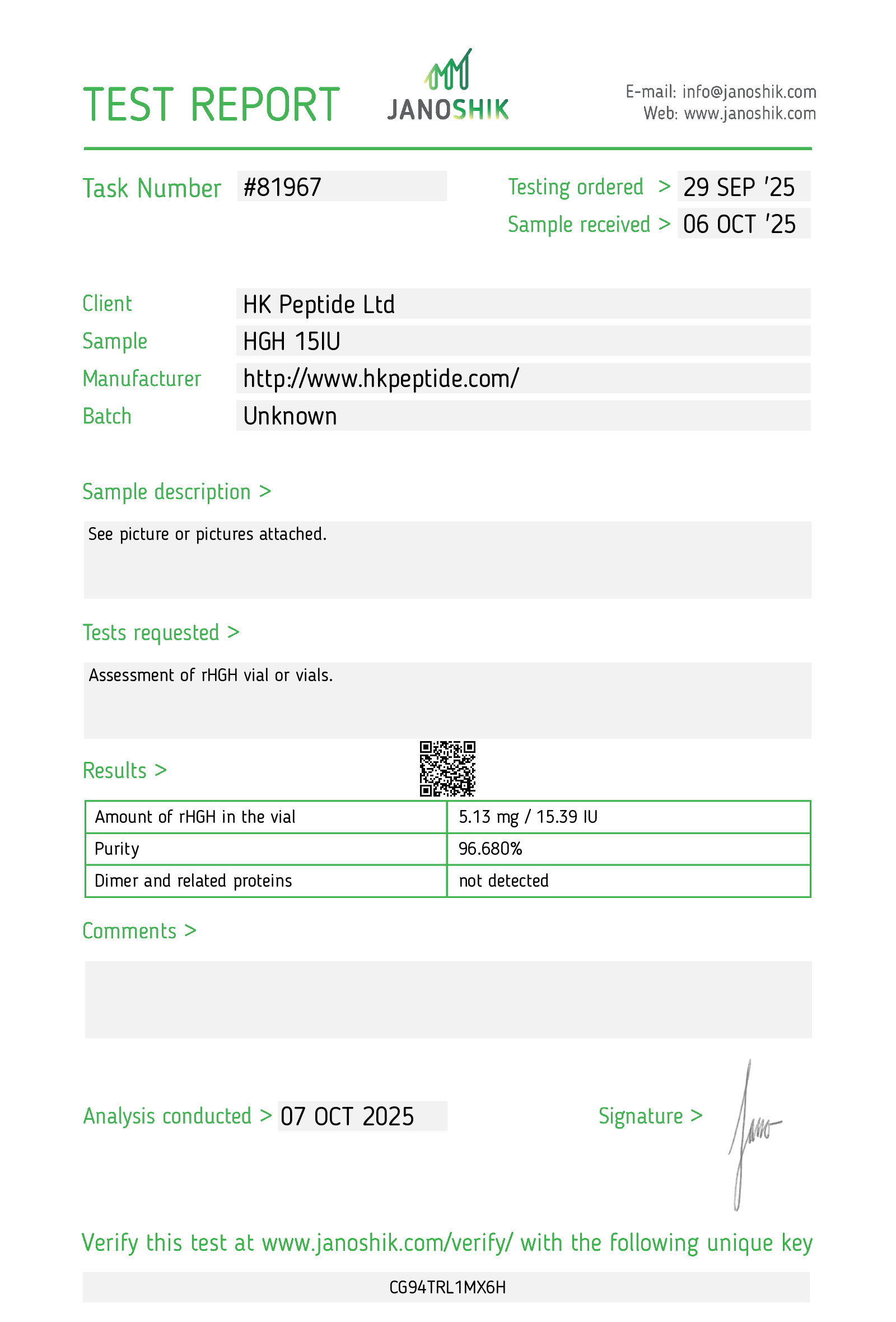
A: Each 10-vial kit comes with a batch-specific COA. We use High-Performance Liquid Chromatography (HPLC) to ensure purity and Size Exclusion Chromatography (SEC) to verify that the protein has not aggregated.
| Weight | 500mg |
|---|
Only logged in customers who have purchased this product may leave a review.


Reviews
There are no reviews yet.