- FREE Shipping with spend over $150
- We've moved! performancepeptidescanada.co same team, same products, same quality.
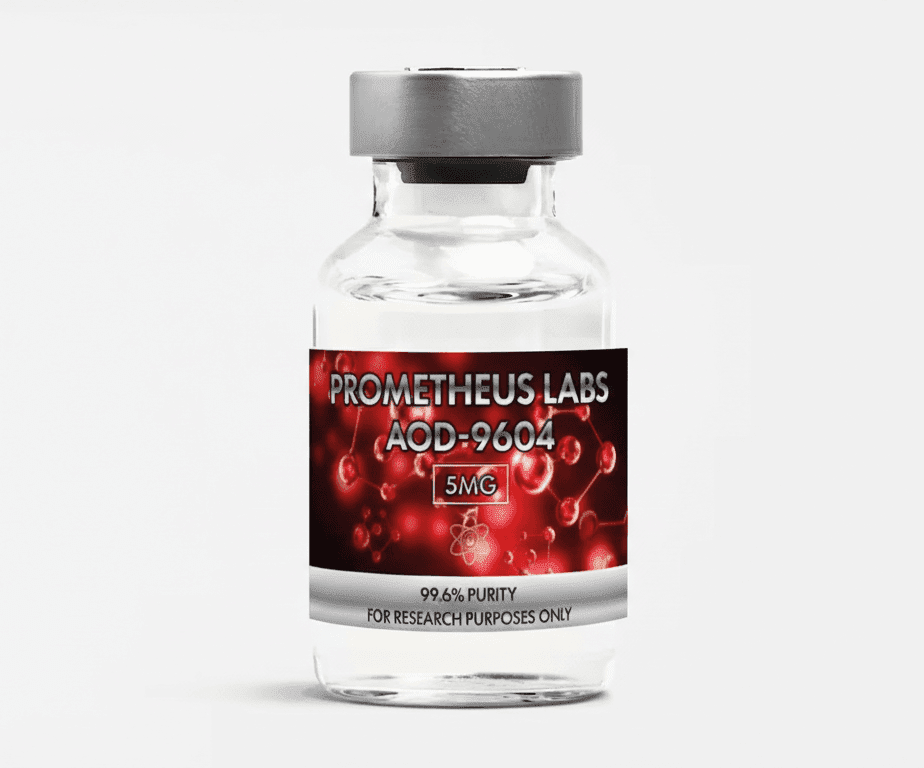
AOD-9604 (Anti-Obesity Drug-9604) is a synthetic peptide analogue of the C-terminal fragment of human growth hormone, residues 177-191. Prometheus Labs supplies AOD-9604 at 50mg per vial, 99%+ HPLC/MS-verified purity, isolating the lipolytic properties of HGH for laboratory research into lipid metabolism and adipose tissue reduction.
$350.00
AOD-9604 (Anti-Obesity Drug-9604) is a synthetic peptide analogue of the C-terminal fragment of human growth hormone (HGH), specifically residues 177-191. Unlike full-length HGH, AOD-9604 is designed to isolate the lipolytic (fat-burning) properties of the hormone while omitting the somatogenic (growth-promoting) and insulin-antagonistic effects. In laboratory research, it is the primary entity for investigating the regulation of lipid metabolism and chondrocyte repair.
Prometheus Labs offers AOD-9604 at 50mg per vial, 99%+ HPLC-verified purity. Our domestic fulfillment ensures that researchers receive laboratory-grade ligands optimized for studying metabolic flux and adipose tissue reduction without compromising glycemic control.
AOD-9604 stimulates the breakdown of triglycerides into free fatty acids and glycerol. Research suggests it acts primarily on beta3-adrenergic receptors in white adipose tissue, increasing the activity of hormone-sensitive lipase (HSL), a critical tool for investigating targeted adipose reduction.
Beyond burning existing fat, AOD-9604 is investigated for its ability to inhibit lipogenesis, the process by which non-fatty food sources are converted into body fat. Researchers utilize this peptide to study the prevention of new fat cell formation, particularly in models of metabolic syndrome.
Research has expanded into regenerative medicine. AOD-9604 is studied for its potential to stimulate the proliferation of chondrocytes and enhance repair of damaged cartilage, frequently used in orthopedic research models involving osteoarthritis and tendon repair.
This lipolytic and chondrogenic research profile is distinct from mitochondrial-targeted metabolic research such as SS-31, which acts on oxidative phosphorylation efficiency rather than adipose tissue or cartilage.
| Storage Condition | Physical State | Estimated Stability |
| -20°C (Freezer) | Lyophilized (Dry) | 24+ Months |
| 2°C to 8°C (Fridge) | Lyophilized (Dry) | 12 Months |
| 2°C to 8°C (Fridge) | Reconstituted | 7–14 Days |
Q: Does AOD-9604 affect blood sugar?
A: Unlike full-length HGH, AOD-9604 does not compete with insulin for its receptor. Research indicates it does not raise blood glucose levels or contribute to insulin resistance, making it a safer entity for studying long-term metabolic changes.
Q: What is the difference between AOD-9604 and Fragment 176-191?
A: AOD-9604 is a slightly modified version of the 176-191 fragment (an added tyrosine at the N-terminus), designed to increase the peptide’s stability and absorption profile.
Q: Is your AOD-9604 shipped within Canada?
A: Yes. Performance Peptides Canada fulfills all orders domestically, essential for maintaining the cold chain and ensuring the peptide’s disulfide bonds remain intact during transit.
Only logged in customers who have purchased this product may leave a review.


Explore premium-grade peptides for scientific research, purity tested, lab certified, and shipped discreetly.

Automated page speed optimizations for fast site performance

Reviews
There are no reviews yet.