

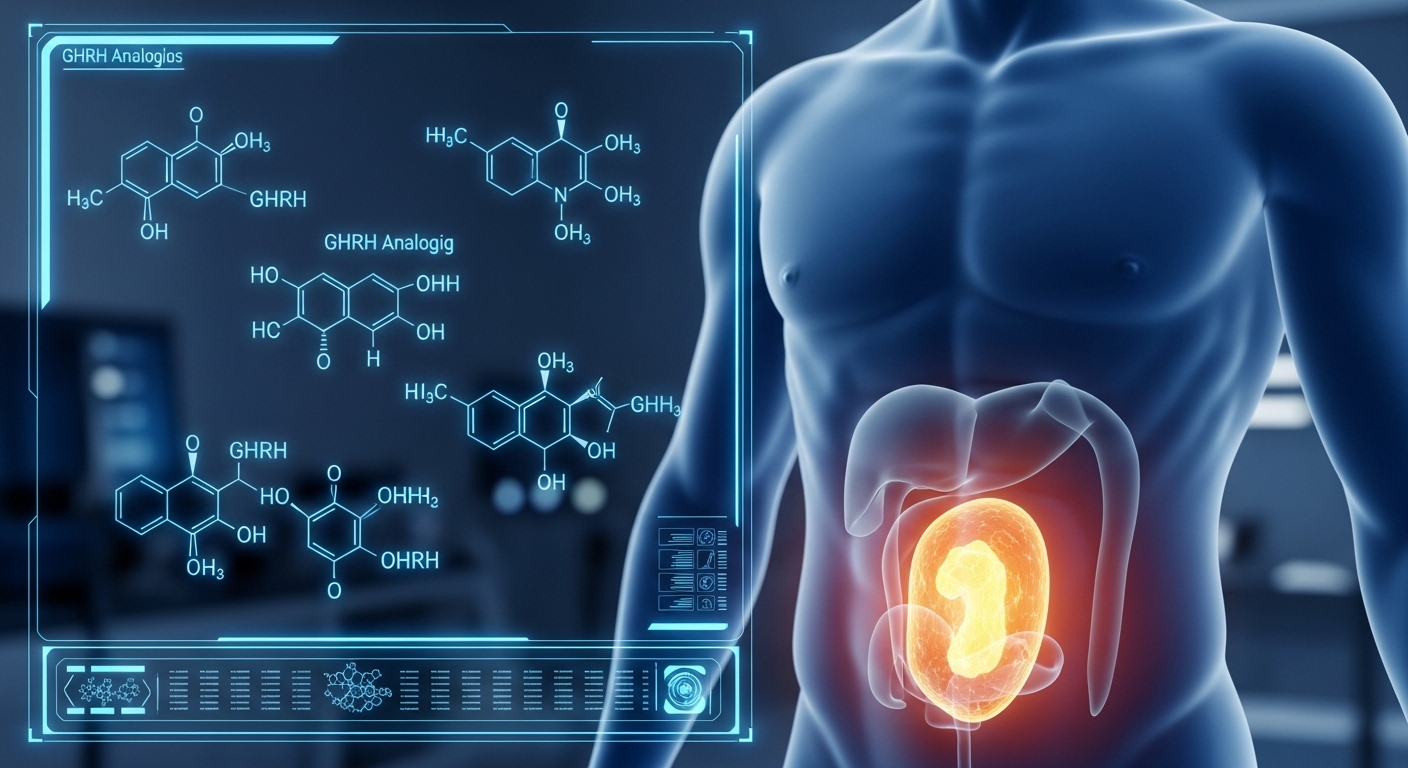
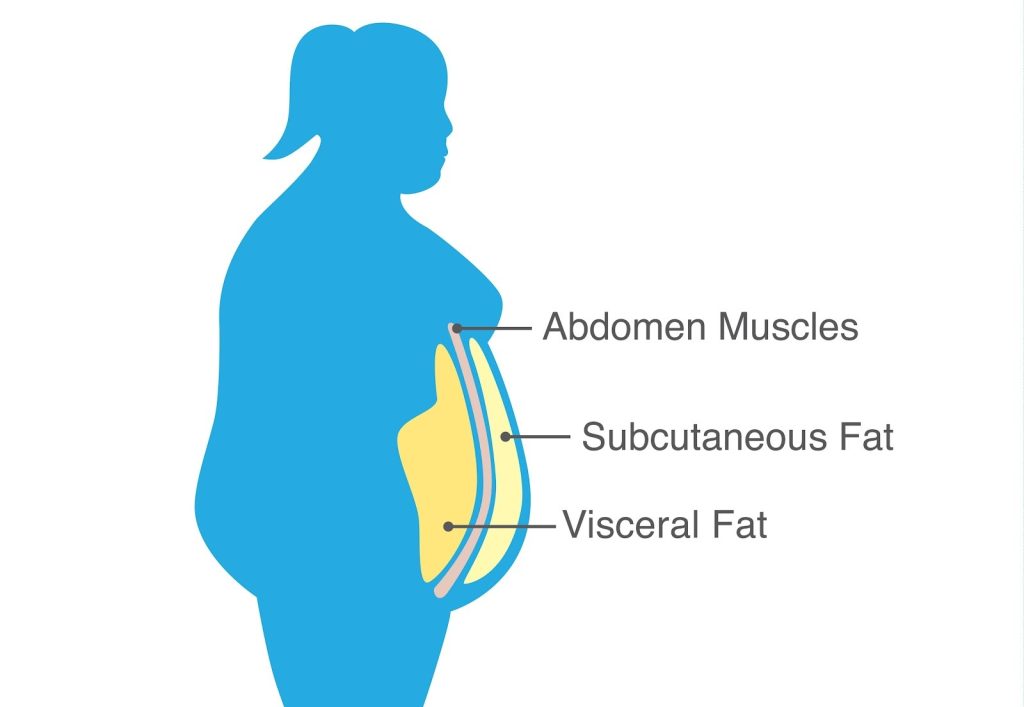
In the study of metabolic disorders, not all adipose tissue is created equal. While subcutaneous fat resides just beneath the skin, Visceral Adipose Tissue (VAT) surrounds internal organs and is a primary driver of systemic inflammation and insulin resistance. Tesamorelin is a synthetic analogue of Growth Hormone-Releasing Hormone (GHRH) consisting of all 44 amino acids of human GHRH with the addition of a trans-3-hexenoic acid group. In clinical research, Tesamorelin is uniquely effective because it stimulates the endogenous secretion of Growth Hormone (GH), which specifically targets the reduction of VAT without the significant side effects associated with synthetic GH. For Canadian researchers, Tesamorelin represents the most precise tool for investigating the reversal of “belly fat” related metabolic decline.
Tesamorelin functions as a GHRH agonist. Unlike injecting synthetic Growth Hormone directly, which can lead to “shutting down” the body’s natural production, Tesamorelin encourages the pituitary gland to release its own GH in a natural, pulsatile manner.
While originally studied for HIV-associated lipodystrophy, current 2026 research has expanded into:
| Feature | Tesamorelin (GHRH Analogue) | Ipamorelin (Ghrelin Mimetic) |
| Structure | 44-Amino Acid Chain | Pentapeptide |
| Potency | High (Specifically for VAT) | Moderate (General GH release) |
| Mechanism | Pituitary GHRH Receptor | Ghrelin Receptor (GHSR) |
| Clinical Focus | Metabolic / Adipose Research | Recovery / Muscle Growth |
Tesamorelin is a large, complex peptide (44 amino acids), making it significantly more fragile than smaller fragments like BPC-157.
“In our laboratory testing, we have found that Tesamorelin is highly prone to aggregation. If you inject the diluent directly onto the lyophilized powder at high pressure, it can cause the peptide to clump, rendering it biologically inactive. We advise Canadian researchers to ‘aim for the glass,’ letting the Bacteriostatic Water trickle down the side of the vial and gently rotate (do not shake) until the solution is perfectly clear.”