Description
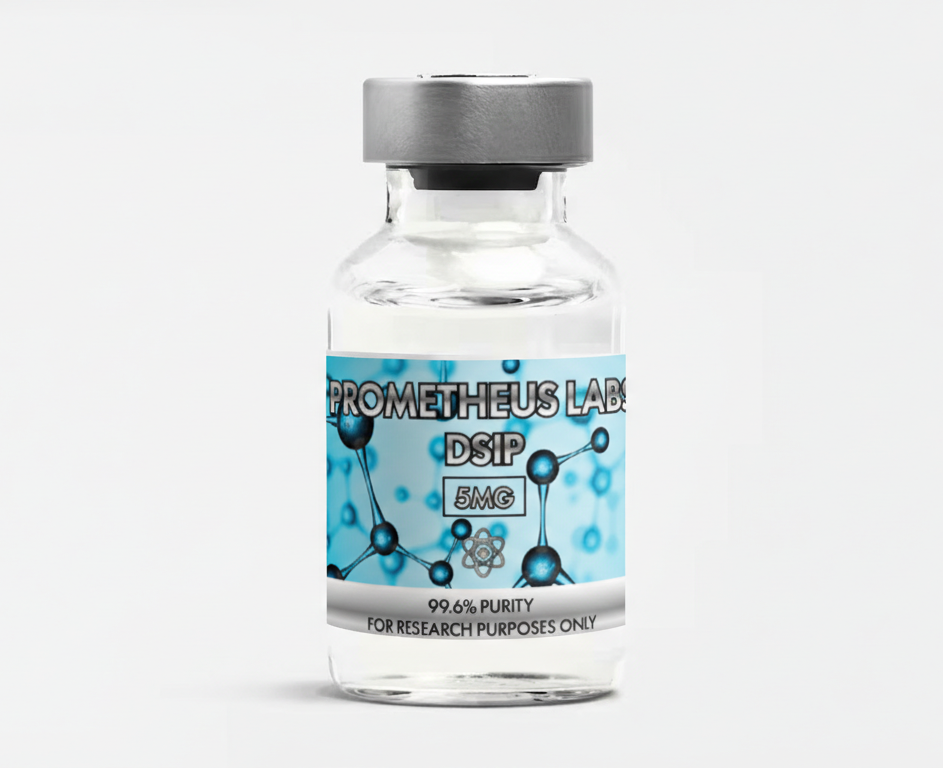
DSIP (Delta Sleep-Inducing Peptide) is a naturally occurring nonapeptide first isolated from the cerebral venous blood of rabbits in a state of induced sleep. In laboratory research, DSIP is the primary entity studied for its ability to cross the blood-brain barrier and induce delta-wave (slow-wave) sleep without the sedative-hypnotic profile of traditional pharmacological agents.
Performance Peptides Canada offers 5mg DSIP vials at 99%+ HPLC-verified purity. Our domestic fulfillment ensures that this sensitive regulatory peptide is handled with strict climate controls to preserve its structural integrity for Canadian neuro-biological research.
Technical Specifications & Chemical Profile
Our DSIP is synthesized to rigorous analytical benchmarks:
- Molecular Formula: C35H48N10O15
- Molecular Weight: 848.81 g/mol
- Amino Acid Sequence: Trp-Ala-Gly-Gly-Asp-Ala-Ser-Gly-Glu
- CAS Number: 62568-57-4
- Purity: ≥99.0% (Verified via HPLC/MS)
- Form: Lyophilized white powder
Primary Research Mechanisms & Neuro-Endocrine Impact
DSIP is a pleiotropic peptide, meaning it influences multiple systems, primarily acting as a “programming” molecule for the central nervous system.
1. Delta-Wave Induction & Sleep Architecture
DSIP is primarily investigated for its impact on Slow-Wave Sleep (SWS). Unlike GABAergic sedatives, DSIP does not suppress REM sleep; instead, it appears to normalize the sleep-wake cycle by modulating the concentrations of serotonin and dopamine in the hypothalamus. Researchers use the 5mg format to study its potential in treating circadian rhythm disruptions and insomnia models.
2. HPA Axis & Cortisol Modulation
In stress research, DSIP is studied for its ability to dampen the Hypothalamic-Pituitary-Adrenal (HPA) axis. It has been shown to reduce levels of corticotropin-releasing hormone (CRH) and inhibit the release of ACTH and cortisol. This makes it a vital tool for investigating the physiological response to chronic stress and its impact on hormonal balance.
3. Opioid Receptor Interaction & Pain Modulation
Research suggests that DSIP may interact with the mu-opioid receptors, potentially modulating pain perception and opioid withdrawal symptoms. It is frequently utilized in studies involving analgesic pathways and the biochemical basis of physical dependence.
Reconstitution & Stability Benchmarks
As a nonapeptide, DSIP is relatively stable but remains sensitive to improper laboratory handling:
- Reconstitution: Recommended diluent is Bacteriostatic Water or 0.9% Sterile Saline.
- Method: Slowly introduce 2mL of diluent down the glass wall. Gently swirl until clear. Avoid aggressive agitation or “frothing,” which can damage the peptide’s delicate structure.
- Storage: Store lyophilized powder at -20°C. Once reconstituted, store at 2°C to 8°C.
Stability Data
| Storage Condition |
Physical State |
Estimated Stability |
| -20°C (Freezer) |
Lyophilized (Dry) |
24 Months |
| 2°C to 8°C (Fridge) |
Lyophilized (Dry) |
12 Months |
| 2°C to 8°C (Fridge) |
Reconstituted |
7–10 Days |
DSIP Research FAQ
Q: Does DSIP cause immediate sedation in a research model?
A: No. DSIP is not a “knockout” agent. In laboratory settings, its effects are typically seen as a gradual normalization of the sleep cycle rather than immediate sedation. Its action is regulatory rather than suppressive.
Q: Can DSIP be studied alongside other peptides?
A: Researchers often study DSIP in conjunction with Epithalon to observe the synergistic effects of pineal gland regulation and slow-wave sleep induction on biological aging markers.
Q: Is your DSIP third-party tested?
A: Yes. Performance Peptides Canada provides a batch-specific COA with every 5mg vial. We use HPLC to guarantee 99%+ purity and Mass Spectrometry to verify the correct amino acid sequence.
Only logged in customers who have purchased this product may leave a review.





Reviews
There are no reviews yet.