- FREE Shipping with spend over $150
- We've moved! performancepeptidescanada.co same team, same products, same quality.
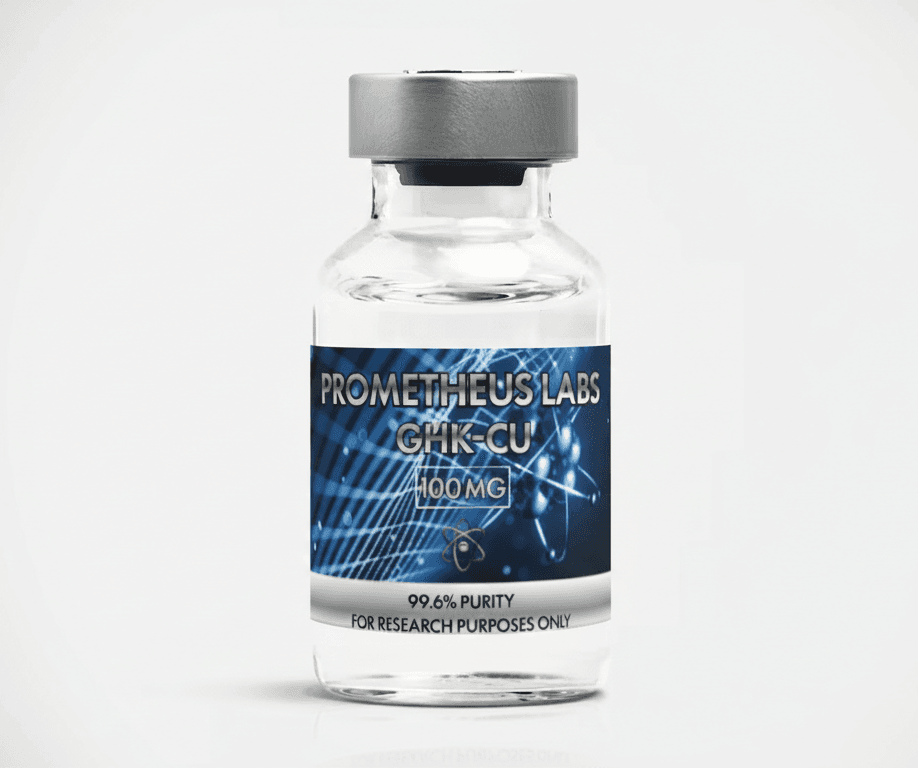
$100.00
GHK-Cu is a naturally occurring copper complex of the tripeptide glycyl-L-histidyl-L-lysine. Originally isolated from human plasma, GHK-Cu has a high affinity for copper(II) ions and is a critical modulator of the body’s regenerative processes. In laboratory research, it is the primary entity studied for its ability to regulate the expression of a vast array of human genes, particularly those involved in wound healing, collagen synthesis, and anti-inflammatory pathways.
Research has identified GHK-Cu as a regulator of over 4,000 human genes associated with tissue repair, inflammation modulation, and cellular regeneration. Plasma concentrations decline with age from approximately 200 ng/mL in early adulthood to around 80 ng/mL by age 60. A trajectory that has made it a subject of significant interest in longevity and regenerative biology research. The copper(II) ion binds to GHK through three nitrogen coordination points, forming a complex with a binding constant of approximately log K = 16.44 at physiological pH, which confers exceptional stability under laboratory conditions.
Performance Peptides Canada provides 100mg vials of GHK-Cu for Canadian researchers. Each batch is HPLC-verified at 99%+ purity, ensuring consistent copper-binding affinity for dermatological and musculoskeletal research.
Our GHK-Cu is synthesized to the following analytical standards:
GHK-Cu is uniquely pleiotropic, influencing regenerative pathways through both gene expression and direct enzyme modulation.
GHK-Cu is widely studied for its ability to stimulate the synthesis of Type I and Type III collagen, as well as the production of dermatological proteins like elastin and fibronectin. By increasing the production of glycosaminoglycans (GAGs) such as hyaluronic acid, GHK-Cu is a vital tool for researching skin density and extracellular matrix (ECM) integrity.
Research indicates that GHK-Cu may reset gene expression to a “younger” or more regenerative state. It upregulates antioxidant enzymes like superoxide dismutase (SOD-1) and inhibits the production of pro-inflammatory cytokines such as IL-1 and TNF-alpha. This dual action makes it a primary entity for investigating oxidative stress and chronic inflammation.
In hair restoration models, GHK-Cu is investigated for its ability to enlarge hair follicle size and stimulate the proliferation of follicular cells. It is also studied for its pro-angiogenic effects, specifically, its ability to increase Vascular Endothelial Growth Factor (VEGF), which promotes the formation of new capillary networks essential for tissue survival.
GHK-Cu is a robust peptide but requires specific attention during reconstitution:
| Storage Condition | Physical State | Estimated Stability |
| -20°C (Freezer) | Lyophilized (Dry) | 24+ Months |
| 2°C to 8°C (Fridge) | Lyophilized (Dry) | 12 Months |
| 2°C to 8°C (Fridge) | Reconstituted | 14–21 Days |
Note: While GHK-Cu is more thermally stable than many signaling peptides, it should be kept away from direct light and stored in a cool environment once in solution to prevent the dissociation of the copper ion.
Q: What is GHK-Cu and how does it differ from GHK?
A: GHK (glycyl-L-histidyl-L-lysine) is a naturally occurring tripeptide found in human plasma, saliva, and urine. GHK-Cu is the copper(II) complex of GHK — the form in which the peptide binds a copper ion through three nitrogen coordination points. The copper-bound form demonstrates significantly enhanced biological activity in research models compared to the free peptide alone, which is why GHK-Cu rather than GHK is the standard subject of tissue repair and gene regulation research.
Q: Is GHK-Cu legal to purchase in Canada?
A: GHK-Cu is sold in Canada strictly as a research reagent for qualified laboratory and non-clinical research use. It is not approved by Health Canada for human use, is not a licensed drug, and is not intended for consumption or therapeutic application. All orders from Performance Peptides Canada are supplied under a research-use-only framework.
Q: What purity standard does Performance Peptides Canada use for GHK-Cu? A: Every batch of GHK-Cu 100mg supplied by Performance Peptides Canada is HPLC-verified at 99%+ purity. A batch-specific Certificate of Analysis is included with every order, allowing Canadian researchers to independently verify compound identity and purity data before laboratory use.
Q: How is GHK-Cu shipped within Canada?
A: GHK-Cu orders are fulfilled domestically from within Canada, eliminating customs delays and cross-border handling. Orders ship as lyophilised powder in sealed research-grade vials. Domestic fulfillment ensures faster delivery and removes the risk of temperature excursions associated with international peptide shipments.
Q: Is GHK-Cu legal in Canada?
A: GHK-Cu (Glycyl-L-Histidyl-L-Lysine Copper) is not a controlled substance under the Controlled Drugs and Substances Act (Canada). It is a naturally occurring tripeptide legally available for scientific research purposes. Performance Peptides Canada supplies GHK-Cu exclusively for laboratory research use and it is not approved by Health Canada for therapeutic use.
Q: What is GHK-Cu used for in research?
A: GHK-Cu is studied primarily for its role in extracellular matrix remodelling, collagen and elastin synthesis, wound healing mechanisms, and anti-inflammatory gene regulation. It is one of the most widely researched copper peptides, with studies examining its ability to modulate the expression of over 4,000 human genes involved in tissue repair and regenerative processes.
Q: What is the difference between GHK-Cu and other copper peptides?
A: GHK-Cu is a tripeptide copper complex glycyl-L-histidyl-L-lysine bound to a copper II ion. Its small molecular size gives it high tissue penetration and a unique affinity for copper transport. Unlike larger synthetic copper peptides, GHK-Cu occurs naturally in human plasma, urine, and saliva, which makes it a primary reference compound for studying endogenous copper-mediated regeneration pathways.
Q: What does the 100mg vial size mean for research applications?
A: The 100mg format provides Canadian researchers with sufficient quantity for extended experimental protocols. GHK-Cu is typically used in small concentrations in vitro, meaning a single 100mg vial supports a high number of individual research applications compared to smaller vial sizes offered by other suppliers.
Q: Why is the powder blue?
A: The blue colour is characteristic of the copper (II) ion bound to the GHK tripeptide. A clear or colourless powder would indicate a lack of copper, meaning it is only GHK (without the “Cu”).
Q: What is the benefit of the 100mg concentration?
A: GHK-Cu research often requires higher molar concentrations than other peptides, especially in topical formulation studies or systemic tissue repair models. The 100mg vial allows for flexible dosing in large-scale experiments.
Q: Does Performance Peptides Canada ship from within Canada?
A: Yes. All GHK-Cu orders are fulfilled domestically. This ensures your research material avoids the long transit times and heat exposure common with international shipping, which is particularly important for maintaining the copper-peptide bond.
| Weight | 100mg |
|---|
Only logged in customers who have purchased this product may leave a review.


Explore premium-grade peptides for scientific research, purity tested, lab certified, and shipped discreetly.

Automated page speed optimizations for fast site performance

Reviews
There are no reviews yet.