- FREE Shipping with spend over $150
- We've moved! performancepeptidescanada.co same team, same products, same quality.
$50.00
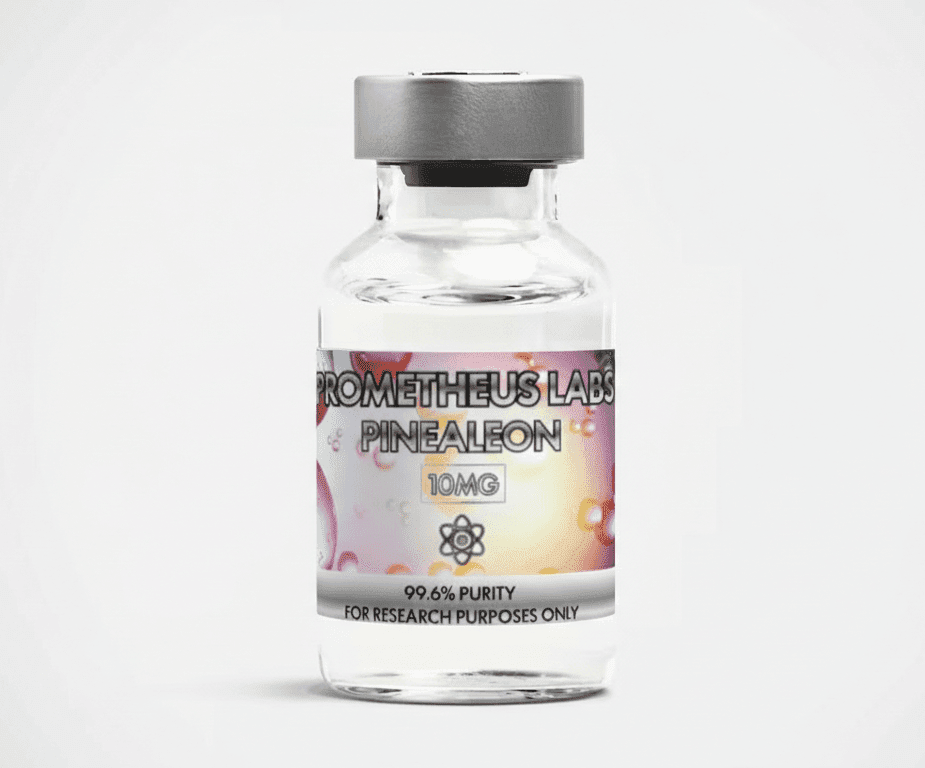
Pinealon is a synthetic tripeptide consisting of three amino acids (Glu-Asp-Arg). It belongs to the class of “Khavinson Peptides” and is a short-chain analogue of the regulatory proteins found in the pineal gland. Due to its exceptionally low molecular weight, Pinealon is capable of penetrating the blood-brain barrier and interacting directly with the chromatin of neurons. In laboratory research, it is a primary entity for investigating neuro-regeneration, cellular aging, and the synchronization of the body’s internal clock.
Performance Peptides Canada provides 10mg Pinealon vials at 99%+ HPLC-verified purity. Our domestic fulfillment ensures that researchers receive laboratory-grade bio-regulators with the structural integrity required for precise neuro-biological and genomic studies in Canada.
Our Pinealon is synthesized to meet the highest analytical benchmarks:
Pinealon is unique among neuro-peptides due to its ability to modulate gene expression without requiring complex transport mechanisms.
Pinealon is studied for its ability to bind to the major and minor grooves of DNA. Research suggests it can “unfold” specific areas of condensed chromatin, thereby activating genes that were previously silenced by age or environmental stress. This makes it an essential tool for researching the epigenetic reversal of cellular aging in the central nervous system.
As a bio-regulator of the pineal gland, Pinealon is investigated for its role in normalizing the production of endogenous melatonin. Researchers utilize the 10mg format to study how this tripeptide influences the Suprachiasmatic Nucleus (SCN) to restore sleep-wake cycles and improve neuro-resilience in models of chronic sleep deprivation or jet lag.
In models of neuro-degeneration, Pinealon is studied for its ability to reduce the accumulation of free radicals and inhibit the pro-apoptotic signaling pathways. By enhancing the survival rate of neurons in the hippocampus and cerebral cortex, it serves as a foundational ligand for researching cognitive preservation and recovery from hypoxic events.
Despite its robust nature as a tripeptide, Pinealon should be handled with professional laboratory standards:
| Storage Condition | Physical State | Estimated Stability |
| -20°C (Freezer) | Lyophilized (Dry) | 24+ Months |
| 2°C to 8°C (Fridge) | Lyophilized (Dry) | 12 Months |
| 2°C to 8°C (Fridge) | Reconstituted | 21–28 Days |
Q: What is Pinealon peptide used for in research?
A: Pinealon is a synthetic tripeptide bioregulator studied primarily for its role in neuroprotection, circadian rhythm regulation, and pineal gland function. Canadian researchers use it to investigate its effects on cognitive function, oxidative stress in neural tissue, and age-related neurological decline.
Q: Is Pinealon a prescription medication in Canada?
A: Pinealon is not a prescription medication. It is a synthetic research peptide not approved by Health Canada for therapeutic or clinical use. Performance Peptides Canada supplies Pinealon exclusively for legitimate laboratory research purposes.
Q: Is Pinealon legal in Canada?
A: Pinealon is not a controlled substance under the Controlled Drugs and Substances Act (Canada). It is legally available for scientific research purposes. It is not approved by Health Canada for human therapeutic use and is supplied by Performance Peptides Canada for laboratory research only.
Q: What is the difference between Pinealon and other neuropeptide bioregulators?
A: Pinealon is a short-chain tripeptide, L-Glutamyl-L-Aspartyl-L-Arginine, originally developed in Russian peptide research programs. Unlike longer synthetic neuropeptides, its short sequence gives it high bioavailability and targeted activity in neural tissue, making it a primary research compound for studying pineal gland signalling and neuroendocrine regulation.
Q: Is Pinealon the same as Epithalon?
A: No. While both are pineal-derived bio-regulators, they have different sequences and primary targets. Epithalon (Ala-Glu-Asp-Gly) is primarily studied for telomerase activation and telomere elongation. Pinealon (Glu-Asp-Arg) is more focused on neuro-regeneration, cognitive function, and the epigenetic regulation of neuronal genes.
Q: Can Pinealon cross the Blood-Brain Barrier (BBB)?
A: Yes. Because Pinealon is a tripeptide (only three amino acids), its molecular weight is low enough to cross the BBB efficiently, which is why it is a preferred entity for research targeting the brain and central nervous system.
Q: Where is your Pinealon shipped from?
A: All orders are fulfilled domestically from within Canada. Performance Peptides Canada ensures that your research material arrives quickly and remains stable, bypassing the risks associated with international shipping and customs processing.
Only logged in customers who have purchased this product may leave a review.


Explore premium-grade peptides for scientific research, purity tested, lab certified, and shipped discreetly.

Automated page speed optimizations for fast site performance

Reviews
There are no reviews yet.