
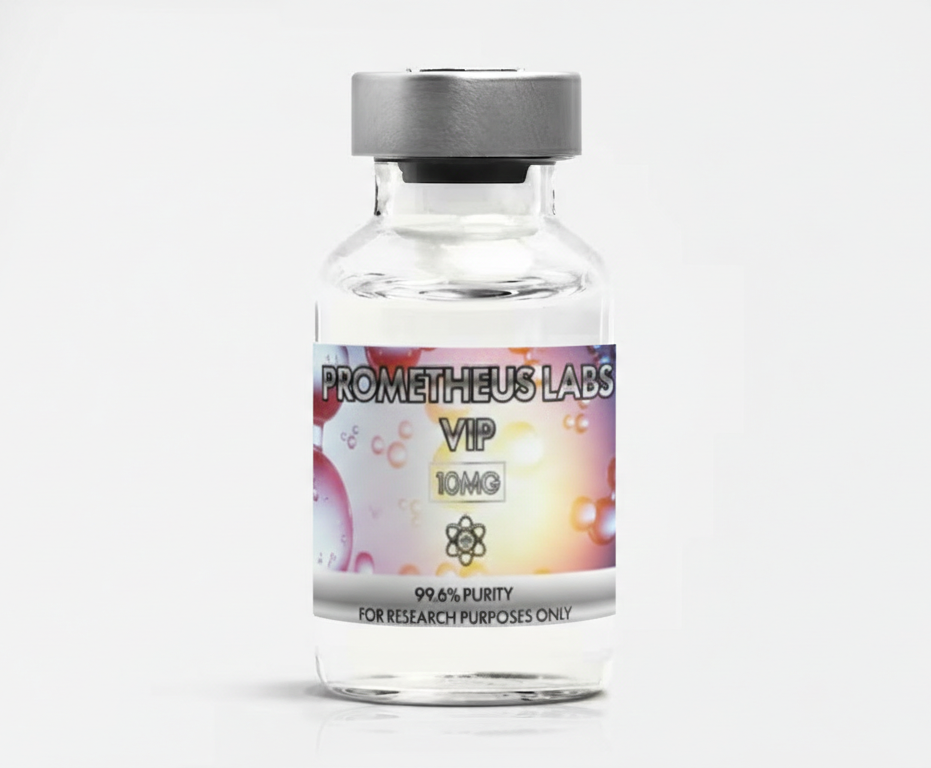
VIP (Vasoactive Intestinal Peptide) is an endogenous 28-amino acid neuropeptide belonging to the glucagon/secretin superfamily. It functions as a potent vasodilator and neuromodulator, exerting its effects through the high-affinity G-protein coupled receptors VPAC1 and VPAC2. In laboratory settings, VIP is a primary entity for investigating the “neuro-endocrine-immune” axis and systemic inflammatory responses.
Performance Peptides Canada provides VIP 10mg vials at 99%+ HPLC-verified purity. Our domestic fulfillment ensures that this sensitive signaling peptide is handled with strict temperature protocols to preserve its biological activity for Canadian research applications.
Our VIP is synthesized to rigorous analytical standards:
VIP is studied for its pleiotropic effects across multiple physiological systems, from the pulmonary tract to the circadian clock.
In immunology research, VIP is investigated for its role as a “macrophage-deactivating factor.” It has been shown to inhibit the production of pro-inflammatory cytokines such as TNF-α, IL-6, and IL-12, while simultaneously upregulating anti-inflammatory mediators like IL-10. This makes it a vital tool for studying Chronic Inflammatory Response Syndrome (CIRS) and autoimmune models.
VIP is highly expressed in the lungs, where it acts as a potent smooth muscle relaxant. Researchers utilize this 10mg format to study its impact on pulmonary arterial pressure and airway resistance. Its ability to stimulate adenylate cyclase and increase intracellular cAMP levels provides a pathway for researching vascular homeostasis.
Within the brain, VIP is a key signaling molecule in the Suprachiasmatic Nucleus (SCN), the body’s master clock. It is essential for the synchronization of circadian oscillations. Researchers use VIP to investigate sleep-wake cycles, jet lag recovery models, and the molecular basis of biological timing.
VIP is a sensitive peptide that requires careful laboratory handling:
| Storage Condition | Physical State | Estimated Stability |
| -20°C (Freezer) | Lyophilized (Dry) | 18–24 Months |
| 2°C to 8°C (Fridge) | Lyophilized (Dry) | 12 Months |
| 2°C to 8°C (Fridge) | Reconstituted | 7–10 Days |
Note: For maximal potency, researchers often aliquot the reconstituted solution and store at -80°C to avoid repeated freeze-thaw cycles.
Q: What receptors does VIP target?
A: VIP primarily interacts with two G-protein coupled receptors: VPAC1 and VPAC2. VPAC1 is widely expressed in the lungs, liver, and T-lymphocytes, while VPAC2 is more prevalent in the CNS and smooth muscle.
Q: Is VIP stable at room temperature?
A: In its lyophilized form, VIP is stable for several weeks during transit. However, upon arrival, it should be stored at -20°C to ensure its 28-amino acid chain remains intact for long-term study.
Q: Does Performance Peptides Canada provide COAs?
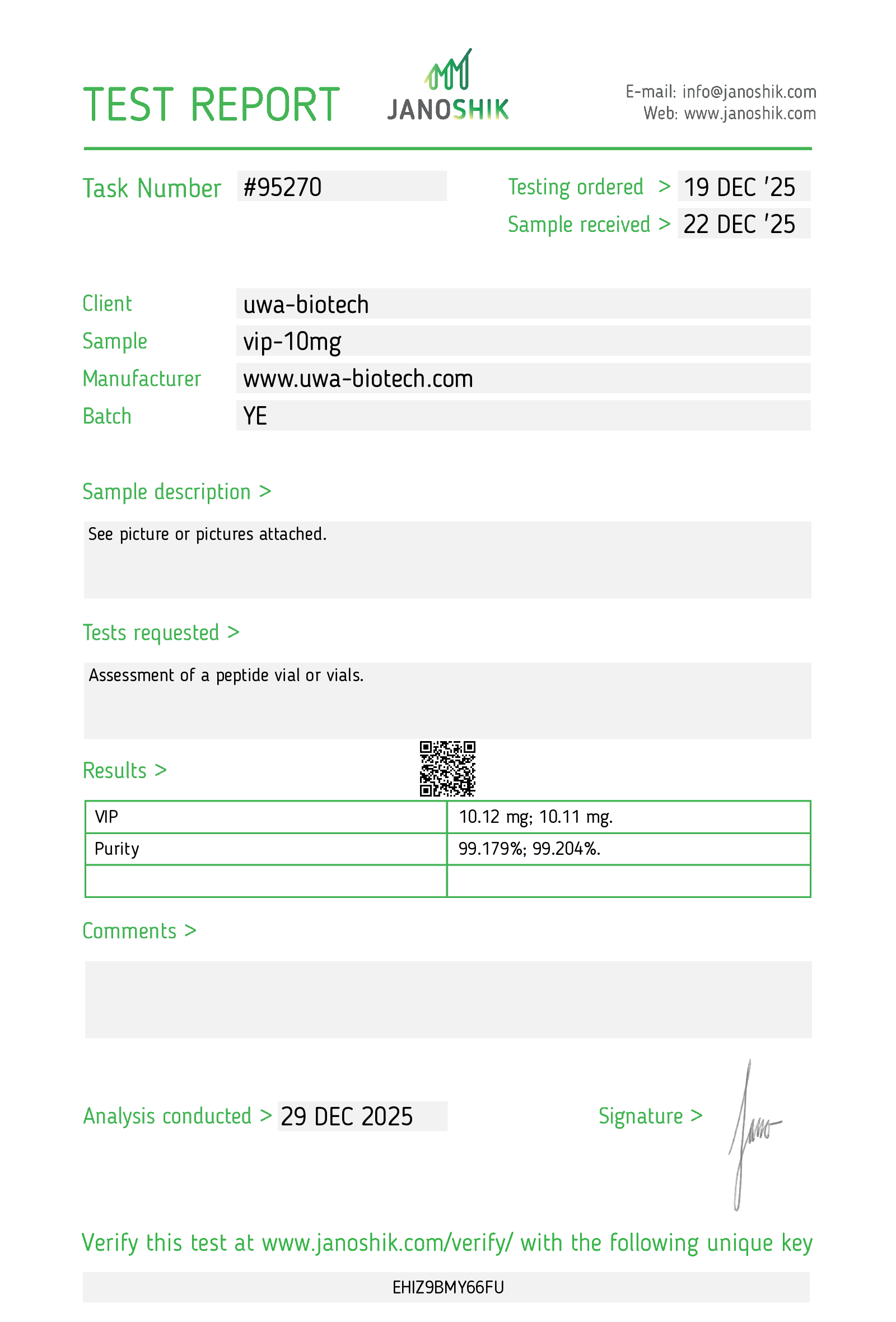
A: Yes. We provide batch-specific HPLC and Mass Spectrometry reports for every 10mg VIP vial to guarantee purity levels of 99% or higher.
| Weight | 100mg |
|---|
Only logged in customers who have purchased this product may leave a review.




Reviews
There are no reviews yet.