- FREE Shipping with spend over $150
- We've moved! performancepeptidescanada.co same team, same products, same quality.
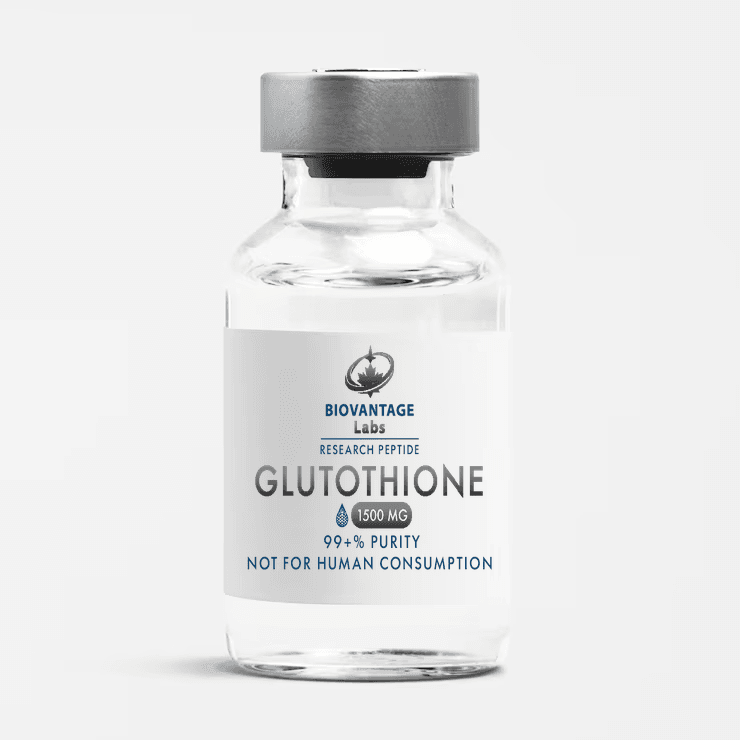
Glutathione (GSH) is the primary intracellular antioxidant tripeptide (Glu-Cys-Gly), studied for its role in oxidative stress regulation, xenobiotic detoxification, immune function, and cellular redox homeostasis research models. Biovantage Labs supplies Glutathione at 99+% purity, HPLC/MS verified. Domestically fulfilled from Canada. Not for human consumption.
$50.00
Glutathione (GSH) is the primary intracellular antioxidant tripeptide (Glu-Cys-Gly), studied for its role in oxidative stress regulation, xenobiotic detoxification, immune function, and cellular redox homeostasis research models. Biovantage Labs supplies Glutathione at 99+% purity, HPLC/MS verified. Domestically fulfilled from Canada. Not for human consumption. Biovantage Labs provides this compound at 99+% purity, confirmed by batch-specific HPLC and Mass Spectrometry analysis, as a lyophilized compound for use in controlled laboratory settings.
| Specification | Detail |
| Molecular Formula | C10H17N3O6S |
| Molecular Weight | 307.3 Da |
| Sequence | Glu-Cys-Gly (gamma-glutamylcysteinylglycine) |
| Purity | ≥99+% (HPLC/MS verified) |
| Physical Form | Lyophilized white powder |
| CAS Number | 70-18-8 |
Glutathione is the primary non-enzymatic antioxidant in mammalian cells, reducing hydrogen peroxide and lipid peroxides via glutathione peroxidase. Research examines cellular GSH/GSSG ratios as markers of redox status and oxidative stress burden in experimental models.
Cellular redox research examining glutathione alongside NAD+ allows investigation of the relationship between two distinct but interconnected antioxidant systems. GSH-dependent peroxide reduction and NAD+-dependent sirtuin-mediated stress response, within the same experimental framework.
Glutathione serves as the substrate for glutathione S-transferases, conjugating electrophilic xenobiotics and metabolic byproducts to facilitate their elimination. This phase II detoxification function is studied in hepatocyte research models examining metabolic clearance pathways.
Intracellular GSH levels influence T-lymphocyte proliferation and cytokine production in immune cell research models. Studies have examined the relationship between cellular redox state, glutathione availability, and immune cell activation thresholds.
For mitochondria-focused oxidative stress research, SS-31 (Elamipretide) is studied in the same experimental context, targeting cardiolipin peroxidation prevention at the inner mitochondrial membrane as a complementary but upstream mechanism to cytosolic glutathione-mediated ROS scavenging.
| Storage Condition | State | Estimated Stability |
| -20°C to -80°C | Lyophilized | 24+ months |
| 2°C to 8°C | Lyophilized | 12 months |
| Room temperature (20°C) | Lyophilized | 3 months |
| 2°C to 8°C | Reconstituted | 7 to 14 days |
Store in a desiccated environment away from UV exposure. Avoid repeated freeze-thaw cycles, which degrade peptide chain integrity over time.
A: Direct cellular uptake of exogenous glutathione is limited by membrane transport mechanisms and rapid extracellular degradation. Research using exogenous GSH examines these transport and stability dynamics, complementing precursor-based approaches (N-acetylcysteine, glycine supplementation) by allowing direct investigation of GSH biology.
A: No. Glutathione supplied by Biovantage Labs is strictly for laboratory research purposes. It is not approved for human consumption, veterinary use, or clinical application.
A: Every batch is verified at 99+% purity using HPLC to confirm compound concentration and Mass Spectrometry to confirm molecular identity. Batch-specific COA documentation is available upon request.
A: All Biovantage Labs products are fulfilled domestically from within Canada, eliminating customs clearance risk and reducing transit time compared to international suppliers.
Only logged in customers who have purchased this product may leave a review.


Explore premium-grade peptides for scientific research, purity tested, lab certified, and shipped discreetly.

Automated page speed optimizations for fast site performance

Reviews
There are no reviews yet.