

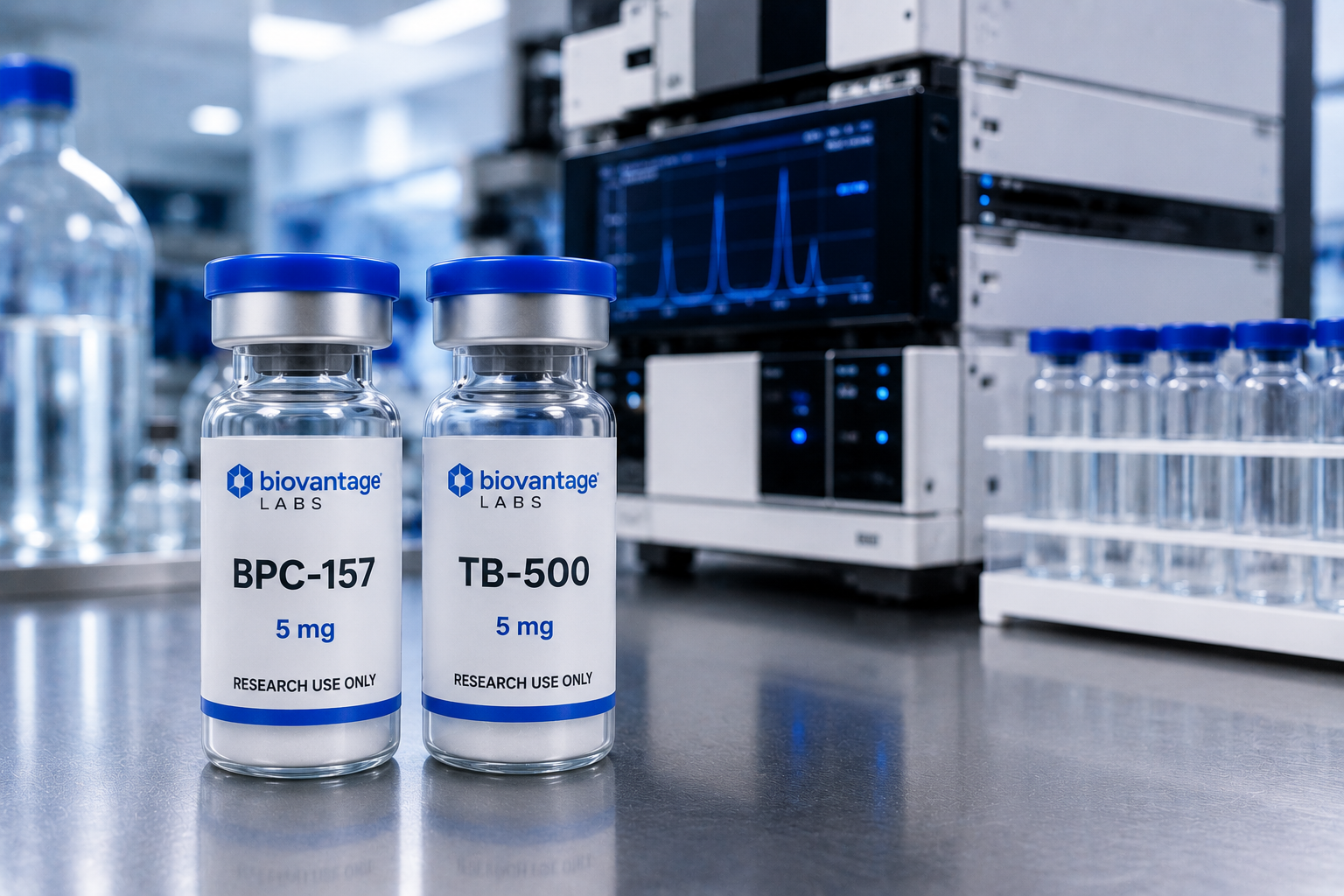
BPC-157 and TB-500 are two of the most researched repair peptides in the Canadian research community, but they’re not the same compound, and they don’t do the same thing. If you’re designing a protocol around tissue repair research, understanding how they differ is the starting point.
BPC-157 (Body Protection Compound-157) is a synthetic peptide made up of 15 amino acids, derived from a sequence found in human gastric juice. It’s been studied in preclinical rodent models since the 1990s, with a research focus on connective tissue: tendons, ligaments, muscle, and the gastrointestinal tract.
The mechanism researchers are most interested in is angiogenesis: the formation of new blood vessels. BPC-157 appears to influence the nitric oxide (NO) system and interact with VEGF (vascular endothelial growth factor) expression, both of which play roles in tissue vascularisation. Studies published in Current Pharmaceutical Design and the Journal of Physiology-Paris have examined these effects in animal models.
One thing to be clear about: BPC-157 has no published human clinical trial data. Health Canada has specifically named it in consumer advisories. All research involving this compound must be conducted under strict in-vitro or controlled preclinical conditions; there’s no grey area there.
TB-500 is a synthetic analogue of Thymosin Beta-4 (Tβ4), a naturally occurring peptide found in virtually every human and animal tissue. Rather than replicating the full 43-amino-acid Tβ4 molecule, TB-500 isolates the actin-binding domain, a 17-amino-acid sequence that retains much of the parent molecule’s research-relevant activity.
Why does actin matter? Actin is central to how cells move, how wounds close, and how tissue remodels after damage. That’s what makes Tβ4 and its analogues an active area of preclinical investigation. Research published in the Annals of the New York Academy of Sciences has explored Thymosin Beta-4’s effects on cardiac, skeletal, and ocular tissue repair in animal models.
TB-500 specifically has been studied for its effects on endothelial cell migration and stem cell activity. Unlike BPC-157, which shows a more localised action profile in preclinical studies, TB-500 appears to distribute more systemically, a distinction that has real implications for how researchers design their protocols.
Like BPC-157, TB-500 is available in Canada for in-vitro and preclinical research only, and has been referenced in Health Canada advisories. Researchers sourcing TB-500 in Canada should always verify batch-specific purity data before use.
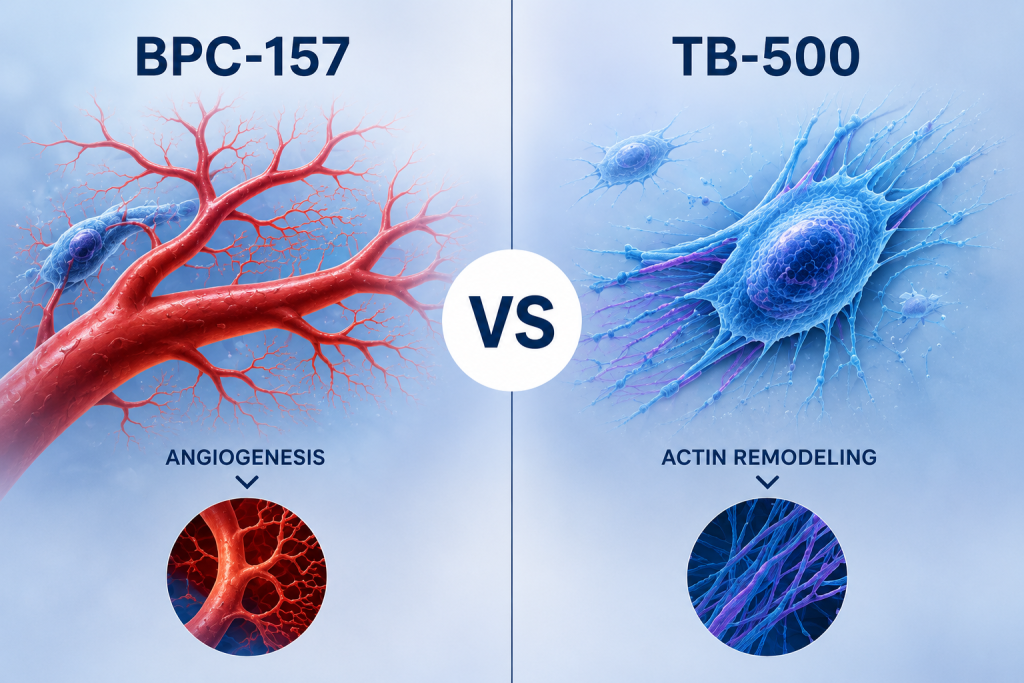
Both compounds appear in tissue repair research, which is why they’re often compared. But their mechanisms are distinct enough that treating them as interchangeable would be a research design error.
| BPC-157 | TB-500 | |
| Origin | Derived from human gastric juice protein | Synthetic analogue of Thymosin Beta-4 |
| Length | 15 amino acids | 17 amino acids |
| Primary Mechanism | Angiogenesis, NO pathway, VEGF interaction | Actin regulation, cell migration, endothelial activity |
| Research Focus | Tendon, ligament, GI tract, muscle (preclinical) | Systemic repair: cardiac, skeletal, ocular models |
| Distribution | More localised action in preclinical models | Broader systemic distribution in animal studies |
| Storage | Lyophilised; cold, UV-protected conditions | Same requirements; comparable stability profile |
The short version: BPC-157 is more targeted; TB-500 works across a broader systemic canvas. Neither is a substitute for the other, and a well-designed research protocol treats them as distinct tools, not competing options.
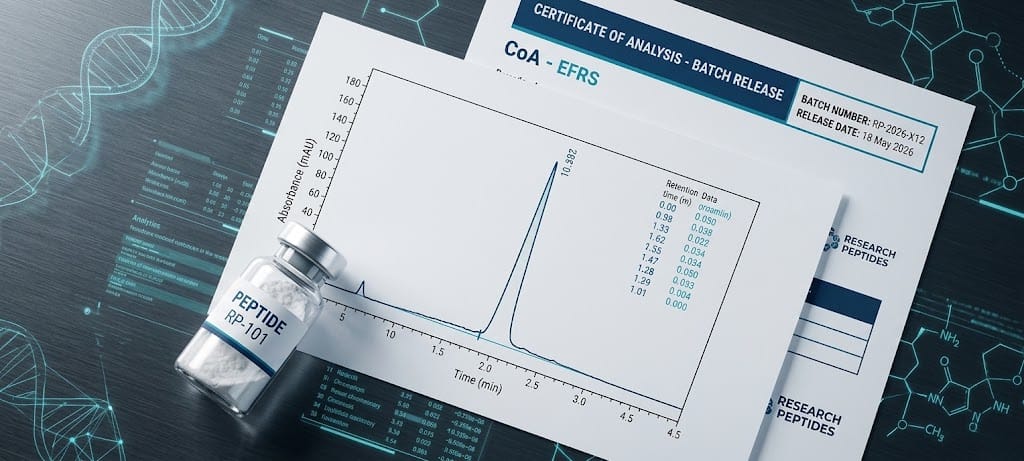
Purity matters more when compounds are this mechanism-specific. A batch-verified COA with both HPLC and MS data is the only way to confirm you’re working with what the label says.
No peer-reviewed study has formally evaluated BPC-157 and TB-500 as a co-administered combination. That gap in the literature is worth acknowledging plainly.
What the existing research does support is that their mechanisms don’t overlap. BPC-157 acts on vascular remodelling and the NO pathway; TB-500 acts on actin dynamics and cell migration. Two distinct pathways, engaged at the same time, that mechanistic non-redundancy that is the basis for ongoing research interest in the combination.
Researchers designing protocols around both compounds should ensure confirmed purity for each, from a supplier with independently verified, batch-specific COAs. Without that baseline, the research itself is compromised before it starts.
The Canadian research peptide market has a real quality problem. Several suppliers reuse generic certificates across multiple batches, import internationally without adequate cold-chain controls, and offer purity claims with no third-party verification behind them.
For BPC-157 and TB-500 specifically, both of which Health Canada has flagged in consumer advisories, working with a compliant, transparent domestic supplier isn’t just a quality preference. It’s a practical necessity.
When evaluating any supplier of research peptides in Canada, these are the non-negotiables:
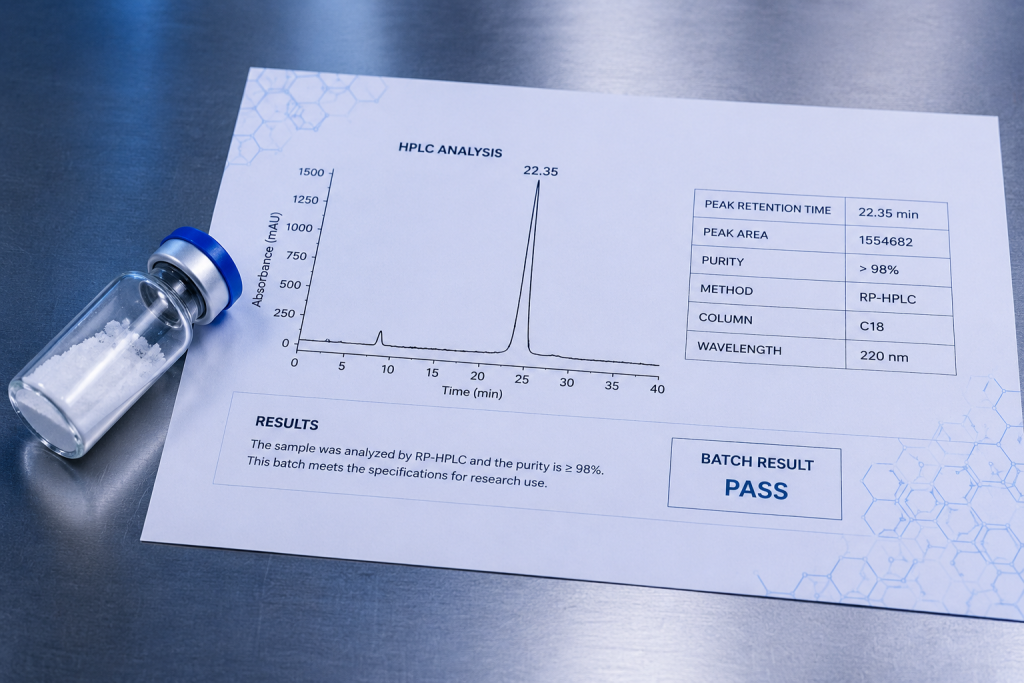
Not a generic certificate reused across lots. A legitimate COA ties HPLC purity data and MS compound verification to a specific batch number, so you know exactly what you’re working with.
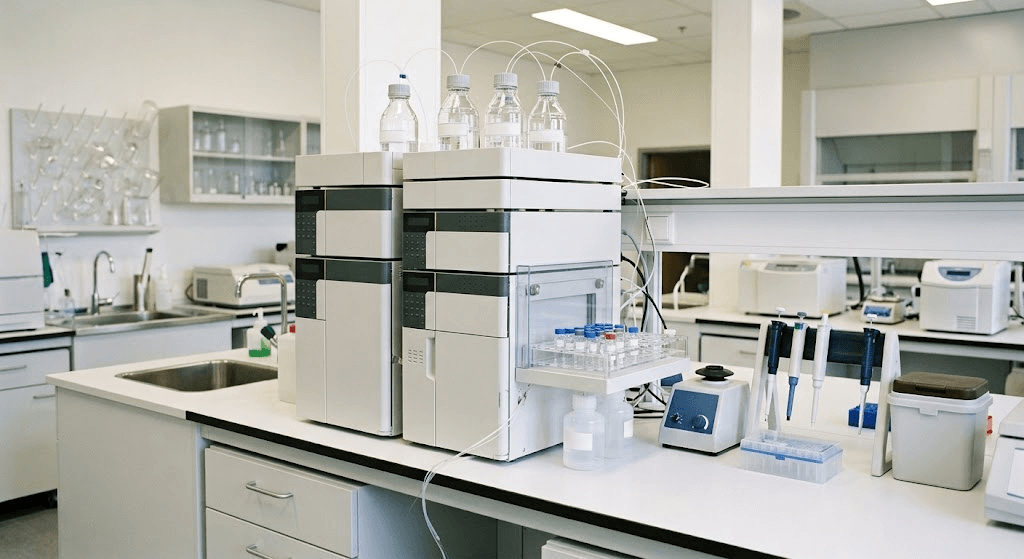
HPLC tells you how pure the compound is. MS tells you what the compound actually is. One without the other is incomplete documentation. A supplier that only provides one should raise questions.
International shipping means customs risk, unpredictable transit times, and cold-chain exposure. Peptides are temperature-sensitive. A supplier shipping from within Canada, with climate-controlled storage throughout, removes those variables entirely.
The Canadian market average sits at 95–98%. Biovantage Labs compounds are independently third-party tested to 99%+ purity, with TFA and residual solvent screening included, not in-house claimed.
Performance Peptides Canada supplies both BPC-157 and TB-500 under the Biovantage Labs brand. Both are lyophilised, HPLC and MS-verified, and fulfilled entirely from within Canada with downloadable batch-specific COAs on every product page.
Both are available in Canada for in-vitro and research use. They are not approved by Health Canada for human consumption or therapeutic application, and Health Canada has referenced both in consumer advisories. Domestic suppliers like Performance Peptides Canada operate under a strict research-use-only framework. Researchers should review current Health Canada guidance and design their protocols accordingly.
Thymosin Beta-4 is a 43-amino-acid peptide found naturally in the body. TB-500 is a synthetic analogue of its actin-binding domain, a shorter, more stable sequence that retains the core functional region of the parent molecule. Researchers use TB-500 as a practical proxy for studying Tβ4’s biological activity in preclinical models.
Their mechanisms don’t overlap; BPC-157 works through angiogenesis and the NO pathway; TB-500 works through actin regulation and cell migration. That makes them potentially complementary in a research context. No peer-reviewed study has formally evaluated the combination, however, and any multi-compound protocol should be designed with appropriate controls and documentation.
At minimum: the compound name, batch or lot number, HPLC chromatogram data showing purity percentage, and mass spectrometry confirmation of compound identity. TFA and residual solvent screening should also be present. A certificate without a batch-specific lot number is not adequate for reproducible research.
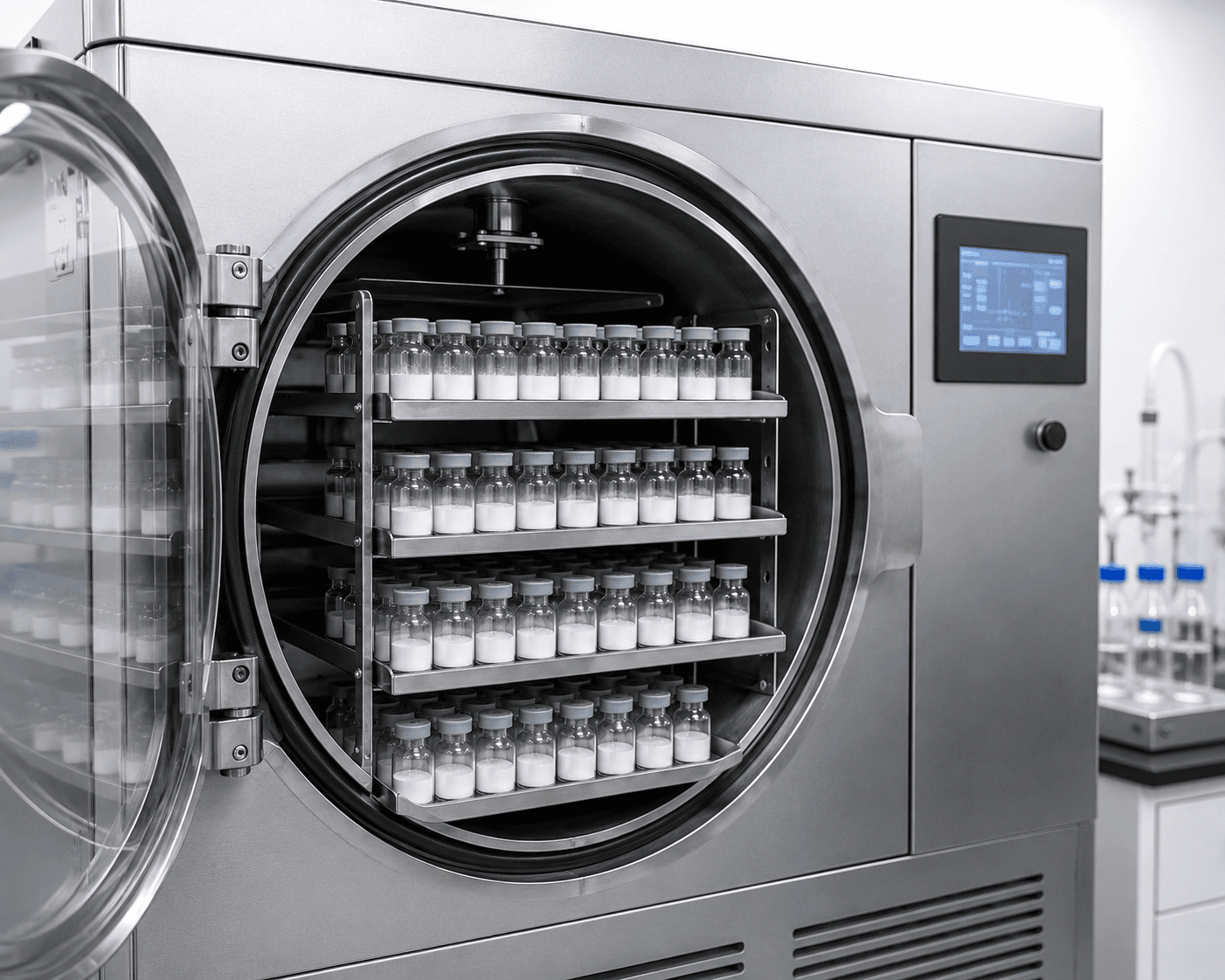
No, when performed correctly, lyophilisation preserves compound integrity by removing water and extending shelf stability. The critical variables are post-lyophilisation storage: cool, UV-protected conditions until reconstitution. Domestic suppliers with climate-controlled fulfillment maintain that environment from production to your door.
| ⚠️ Research Use Only Disclaimer: All compounds described in this article are supplied strictly for in-vitro laboratory and independent research use only. They are not approved by Health Canada for human consumption or therapeutic application. This content does not constitute medical advice. Researchers are responsible for ensuring their protocols comply with all applicable regulations. |