
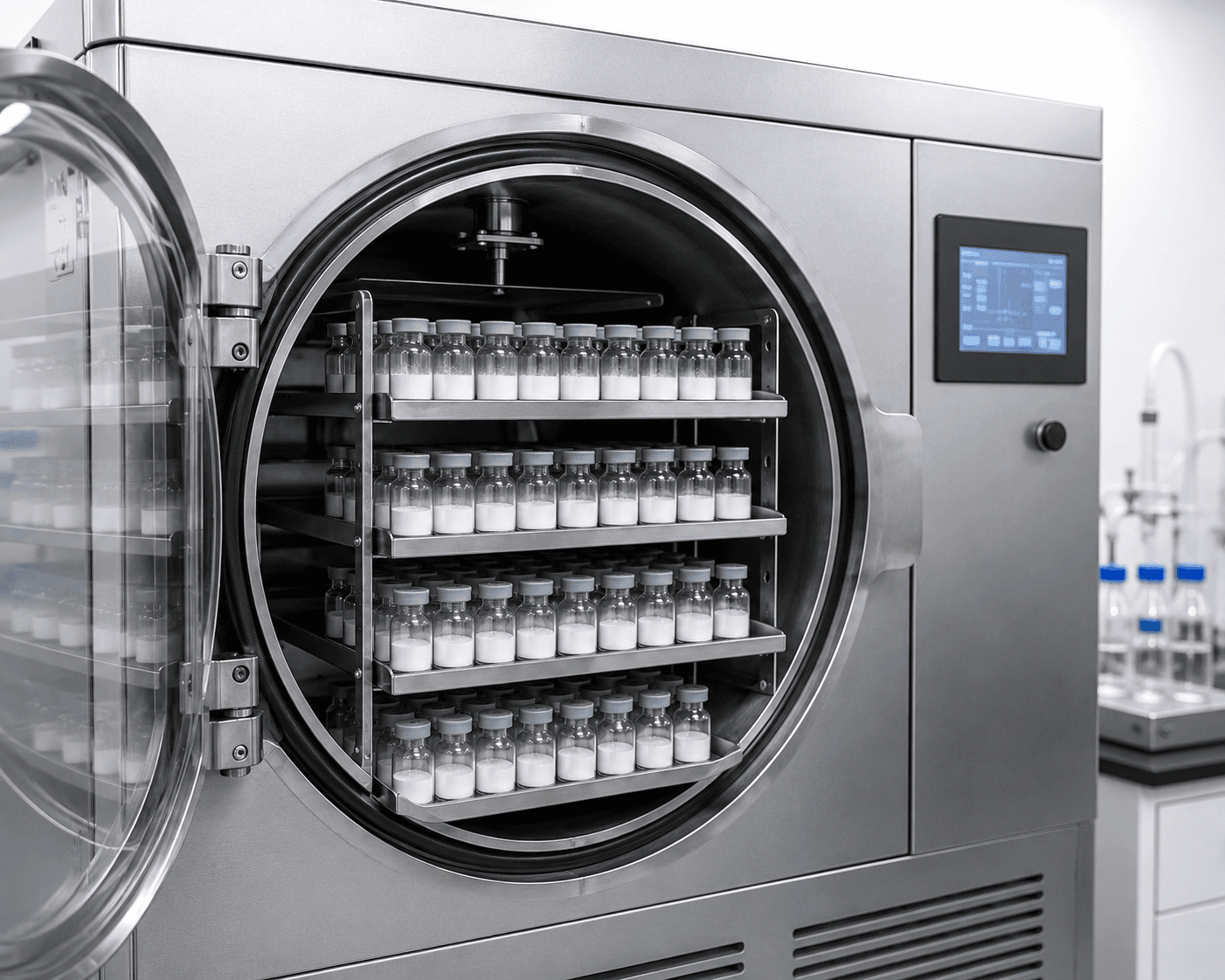
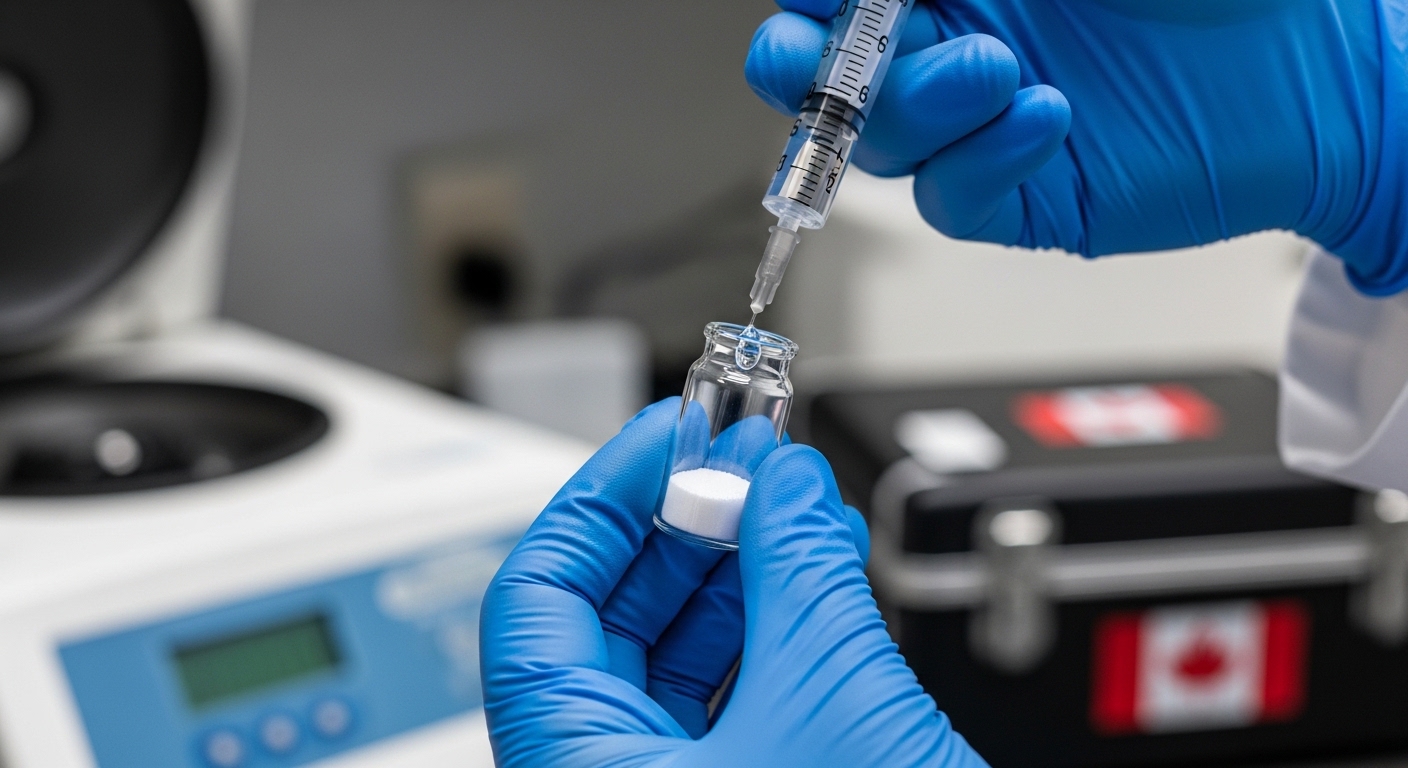
Most research peptides arrive as a freeze-dried powder. Before they can be used in any in-vitro protocol, they need to be dissolved into a liquid solution. That process is called peptide reconstitution, and getting it right matters more than most researchers expect.
Use the wrong solvent, add it too fast, or skip a sterile step, and you risk degrading the compound before your research even begins. This guide covers everything you need: the right equipment, the correct technique, how to calculate concentration, and how to store your solution afterward.
| Research Use Only: All content on this page is intended strictly for in-vitro laboratory and independent research use. These compounds and procedures are not intended for human use, consumption, or therapeutic application. All protocols are for research purposes only, in compliance with Health Canada guidelines. |
Peptides are lyophilised, freeze-dried, because that state is the most stable for storage and shipping. Removing moisture dramatically slows degradation, giving lyophilised compounds a long shelf life. Reconstituted solutions are considerably more fragile, which is why how you prepare them matters.
Before starting any peptide prep, confirm you have the following:
Missing any of these isn’t a minor inconvenience; it’s a contamination risk. Peptides in solution are far more vulnerable to degradation than their lyophilised counterparts, and bacterial contamination can occur from a single lapse in sterile technique.
The right solvent depends on the compound. Using the wrong one shortens stability or prevents dissolution entirely.
What not to use: Plain sterile water has no bacteriostatic agent, which shortens stability and increases contamination risk. Saline isn’t suitable for most peptides. Tap water is never acceptable in a research setting.
If you’re sourcing bacteriostatic water in Canada, use a domestic supplier. It eliminates the same cold-chain and customs variables that make international peptide sourcing unreliable.
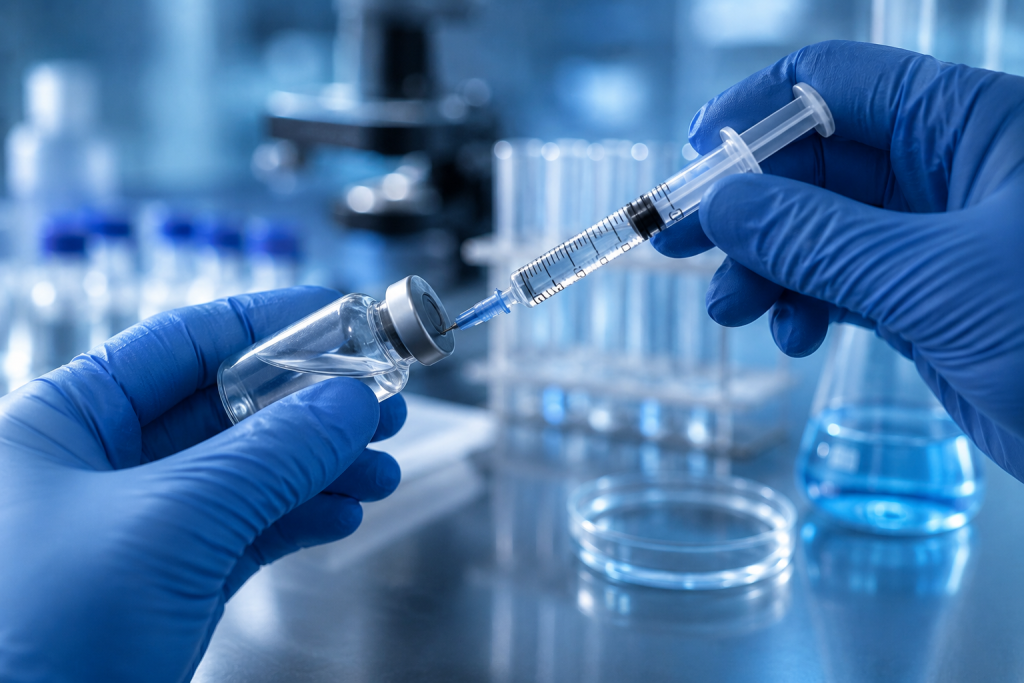
This sterile peptide reconstitution protocol is written for lyophilised research compounds using bacteriostatic water. Follow each step in order.
Wipe your surface with a 70% isopropyl swab and let it air dry. Wash your hands. Gather everything listed above before touching the vials.
Take the vial out of cold storage and let it reach room temperature before you open it. Adding a cold powder to room-temperature liquid causes clumping and uneven dissolution.
Wipe the rubber stopper on both the peptide vial and the bacteriostatic water vial with a fresh alcohol swab. Let them air dry for 5–10 seconds. Don’t blow on them or fan them dry that defeats the purpose.
Pull the calculated volume of bacteriostatic water into a sterile syringe (see concentration calculation below). Tap the barrel gently to move any air bubbles to the tip, then expel them before proceeding.
This is where most reconstitution errors happen. Do not inject the solvent straight onto the peptide cake; the force can fragment or denature it. Instead, angle the syringe so the liquid runs slowly down the inside wall of the vial, letting it reach the powder gradually.
Once the solvent is in, gently roll the vial between your palms or swirl it slowly. Never vortex. Never shake. Agitation creates bubbles and puts mechanical stress on the peptide chain. Keep going until the solution is fully clear; some compounds take a few minutes.
A properly reconstituted solution is clear and free of floating particles. Cloudiness usually means incomplete dissolution or that the compound needs a co-solvent. If it’s not clear after several minutes of gentle swirling, stop and reassess your solvent choice before proceeding.
Write on the vial: compound name, lot number (from your Certificate of Analysis (COA)), concentration, reconstitution date, and solvent used. Don’t rely on memory in a research context.
You need to know how much solvent to add before you draw it. The formula is straightforward:
| Concentration (mg/mL) = Peptide mass (mg) ÷ Volume of solvent added (mL) |
Example: 5 mg vial + 2.5 mL bacteriostatic water = 2 mg/mL
To work backwards from a target concentration:
| Volume needed (mL) = Peptide mass (mg) ÷ Target concentration (mg/mL) |
Example: Want 1 mg/mL from a 5 mg vial? Add 5 mL.
Do this calculation before you draw the solvent, and write it down. A 1 mL insulin syringe gives you the accuracy needed for small volumes.
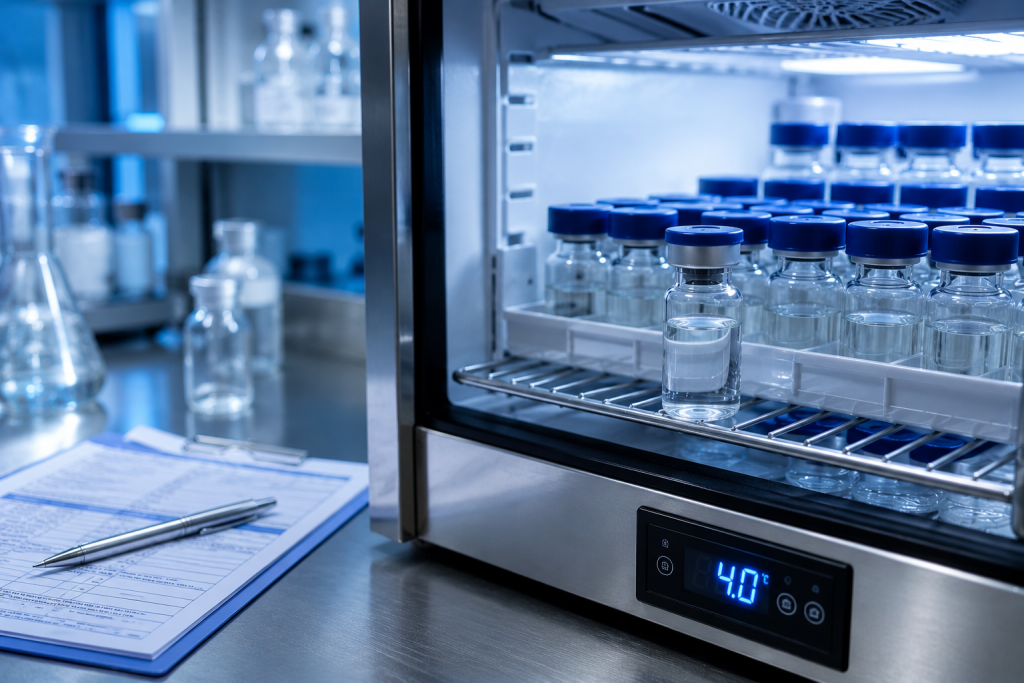
While lyophilised powder is relatively forgiving, following a strict peptide storage guide becomes essential once the solution is reconstituted.
The Most Common Reconstitution Mistakes
Even careful researchers make these. Knowing them in advance is the best protection.
The force fragments the lyophilised material. Always run solvent down the vial wall.
It creates foam and mechanical stress. Swirl slowly and give it time.
Plain water, saline, or acetic acid, where bacteriostatic water was needed, each causes different problems. Confirm before you start.
One unswiped stopper is enough to contaminate the solution.
If your protocol only needs a small amount over a short window, reconstitute a smaller volume. The powder keeps; the solution doesn’t.
Unlabelled vials with unknown concentrations or reconstitution dates create reproducibility problems that compound fast.
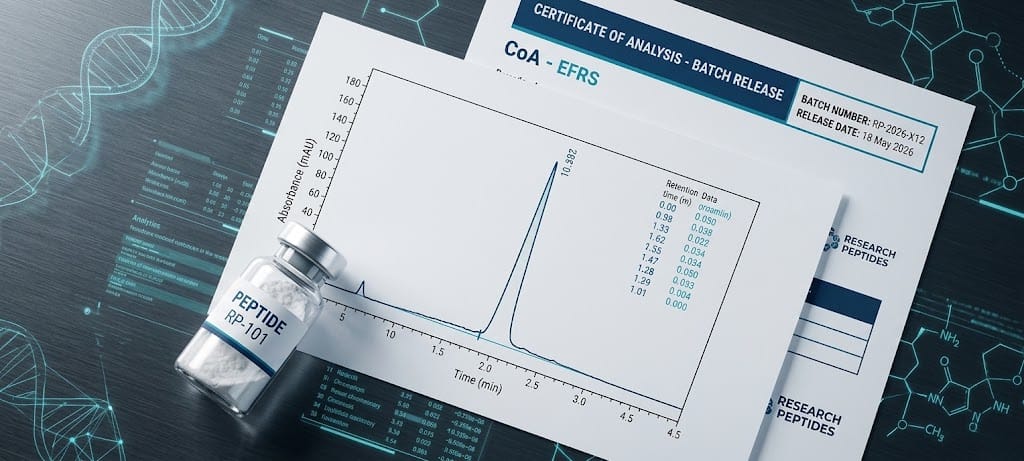
Good technique only protects what’s already in the vial. If the compound hasn’t been independently verified for purity, every step above is built on an uncertain foundation.
Biovantage Labs compounds are HPLC and MS-tested to 99%+ purity, with batch-specific Certificates of Analysis downloadable from every product page. All orders ship domestically across Canada from climate-controlled storage, with no customs risk and no cold-chain compromise.
Bacteriostatic water works for the majority of research peptides, including BPC-157, TB-500, Ipamorelin, and Thymosin Alpha-1. It’s 0.9% benzyl alcohol that inhibits bacterial growth and extends the solution’s usable life. IGF-1 LR3 and some growth hormone fragments require 0.6% acetic acid instead, due to poor solubility at neutral pH. Always check your compound’s documentation before reconstituting.
Injecting straight onto the peptide cake puts mechanical force directly on the lyophilised material, which can fragment or denature it. Running the liquid slowly down the wall lets it reach the powder gently and evenly, improving dissolution without disrupting the compound.
Solutions made with bacteriostatic water are commonly cited in research settings as stable for up to 4 weeks at 2–8°C in dark storage. Plain sterile water solutions are generally considered stable for around 5–7 days. Temperature fluctuations or light exposure will shorten either window.
Divide the peptide mass (mg) by the volume of solvent added (mL). A 5 mg vial with 2 mL added gives 2.5 mg/mL. To hit a target concentration, divide the peptide mass by that target to get the volume required.
| Research Use Only. All compounds on this page are sold strictly for in-vitro laboratory and independent research use. Not for human use. Not for therapeutic application. Performance Peptides Canada operates in compliance with Health Canada guidelines. |
3 Responses